

Launch in 30 Days: Part Time Online Business for Full Time Workers
The best part-time online business ideas for beginners fall into two camps: service-based freelancing and low-investment digital or micro-ecommerce models. This article walks through a curated list of ideas, a framework for picking the right one, a 30-day launch plan, and the basic U.S. tax steps you’ll need once money starts coming in.
TL;DR:Virtual assistant, tutoring, and template-selling ideas require minimal upfront investment and can start generating income quickly within your existing scheduled hours.Content creation like YouTube or podcasts demands more time and patience but can produce assets that generate passive income over the long term.Micro-ecommerce options such as print-on-demand and dropshipping involve low startup costs, but success depends on demand validation and volume, especially for profit margins.Choose a side business based on your available hours, skill set, and risk appetite, and validate ideas with small, inexpensive tests before full commitment.Following a structured 30-day launch plan and a two-hour daily workflow helps prevent burnout and ensures steady progress in building your online side business.
Freedom After 45Build Your Business Around Two HoursFreedom After 45 offers a step-by-step 2-Hour Workflow blueprint for women over 45 seeking recurring income without traditional barriers.Explore the 2-Hour Workflow
Table of Contents
- Part-Time Online Business Ideas Worth Testing First
- How Do You Choose the Right Idea for Your Life?
- Your 30-Day Plan to Launch a Part-Time Online Business
- What Legal and Tax Steps Do You Need to Take?
- How the 2-Hour Workflow Fits This Roadmap
- Growth That Lasts Beats Growth That Burns You Out
- Ready for a Guided, Time-Boxed Way to Start?
- Where to Go Next for Planning and Tax Help
- Sources
- FAQ
Part-Time Online Business Ideas Worth Testing First
Not every idea deserves your limited hours. Some take a weekend to validate. Others eat months before you know if they’ll work. The list below groups ideas by type so you can match one to your schedule, your existing skills, and how much risk you’re willing to carry.
Digital products turn knowledge or creative work into something you sell once and deliver infinitely.
- Ebooks and guides. Best for people with specialized knowledge in a niche topic. Expect 5 to 8 hours a week once the initial writing is done, with startup costs under $100 for cover design and a sales page. The standout: no inventory, no shipping, no ceiling on how many copies you sell. Pros: passive resale potential and low overhead. Con: writing and formatting the first version takes real upfront time before any sales happen.
- Templates and printables. Fits people comfortable with spreadsheets, Canva, or basic design tools. Weekly hours run 3 to 6 once you have a catalog. Startup cost is close to zero if you already own design software. Pros: fast to create, easy to bundle into multiple listings. Con: marketplaces are crowded, so differentiation matters more than volume.
- Online mini-courses. Suits someone who already teaches or trains in some capacity. Plan for 8 to 12 hours weekly during creation, dropping to 2 to 4 hours for maintenance. Startup costs range from $50 to $300 depending on hosting platform. Pros: higher price points than templates, strong repeat-buyer potential. Con: production takes longer than most people expect, especially video editing.
Micro-ecommerce models let you sell physical or print goods without holding inventory yourself.
- Print-on-demand. Good for anyone with basic design skills and a niche audience in mind, like a hobby community or a regional joke only locals get. Time commitment sits at 4 to 8 hours weekly. Startup cost is minimal since production only happens after a sale. Pros: no inventory risk and simple setup on platforms like Etsy or Shopify. Con: profit margins are thin, so you need volume or higher price points to make it worthwhile.
- Dropshipping. Works for people willing to spend time on supplier research and customer service. Expect 8 to 12 hours a week, particularly early on while you’re testing products. Startup costs typically range from $200 to $500 for a store, ads, and samples. Pros: no warehousing and flexible product testing. Con: shipping times and quality control depend entirely on a third-party supplier, which can hurt your reputation fast.
Service and freelance work trades your time and skill directly for pay, which means faster income but a lower ceiling on scale.
- Virtual assistant work. Ideal for organized people who like administrative tasks, email management, or scheduling. Forbes notes virtual assistant work as one of the lowest-barrier online side careers, typically requiring 5 to 10 focused hours a week. Startup cost is close to $0 since you likely already own a laptop and internet connection. Pros: quick to start, steady repeat clients once established. Con: hourly work has a hard ceiling unless you raise rates or add retainer clients.
- Freelance copywriting or editing. Best for strong writers who can turn around clean drafts quickly. Weekly hours vary from 5 to 15 depending on client load. Startup cost is minimal, maybe a portfolio site for $50 to $100 a year. Pros: high demand across nearly every industry. Con: finding your first few clients takes longer than the actual writing work does.
- Bookkeeping. Suits detail-oriented people comfortable with spreadsheets or software like QuickBooks. Expect 5 to 10 hours weekly per client. Startup costs are near zero beyond software subscriptions. Pros: recurring monthly income once you land a handful of small business clients. Con: some clients expect tax knowledge you may need to build over time.
- Social media management. Works well for people who already understand content calendars and platform algorithms. Time commitment runs 5 to 10 hours weekly per client. Startup cost is minimal. Pros: creative work with visible results you can point to. Con: client expectations around growth numbers can be unrealistic, so set scope clearly upfront.
- Online tutoring. A strong fit for anyone with subject expertise, whether academic, music, or test prep. Forbes lists tutoring among the flexible online careers with real earning upside if you focus 5 to 10 hours a week. Startup cost is close to zero if you use an existing tutoring platform. Pros: consistent scheduling and repeat sessions. Con: income is capped by hours available, since it’s a one-to-one service.
Creator and content work builds an audience over time, which means slower validation but potential for ad revenue, sponsorships, and product sales down the line.
- YouTube or podcast channel. Fits people with a specific point of view or expertise they enjoy sharing on camera or mic. Expect 6 to 10 hours weekly for recording, editing, and posting. Startup costs range from $0 to $300 depending on equipment. Pros: builds an asset that keeps working after you stop actively posting. Con: growth is slow, often six months or more before meaningful traction.
- UGC content creation. Good for comfortable, camera-friendly people willing to make short-form videos for brands. Time commitment is 3 to 6 hours weekly. Startup cost is minimal, just a phone and decent lighting. Pros: brands pay per video, so income can start faster than traditional influencer work. Con: rates per video are often modest until you build a portfolio.
Niche low-friction options round out the list for people who want something they can test almost immediately.
- Affiliate marketing. Suits anyone with a blog, email list, or social following, even a small one. Weekly hours run 4 to 8. Startup cost is close to $0 if you already have a platform to post on. Pros: no product to create or ship. Con: commissions take time to add up and depend heavily on traffic.
- Microconsulting. Best for professionals with a specific skill set, like marketing strategy or resume review, sold in short paid sessions. Expect 3 to 6 hours weekly. Startup cost is minimal beyond a profile on a consulting marketplace. Pros: high hourly rates relative to time invested. Con: requires an existing credential or track record clients can verify quickly.
If you want to validate something within a week, service and freelance options top the list since you can land a first client almost immediately. Creator content and dropshipping need more patience, often a month or more before you see whether the idea has legs.
How Do You Choose the Right Idea for Your Life?
Pick the idea that fits your actual weekly hours before you pick the one that sounds exciting. That single decision prevents more burnout than any other step in this process.
Run every option through these criteria:
- Weekly time available. Be honest about what’s left after work, family, and sleep. Five hours a week rules out anything requiring daily client calls.
- Upfront cost. Match the idea to what you can afford to lose, not just what you can afford to spend.
- Skill match. Choose something close to a skill you already have. Learning a brand-new skill and building a business at the same time doubles your risk.
- Income predictability. Service work tends to pay faster and more predictably than content or ecommerce, which can take months to find traction.
- Scheduling flexibility. Some services (bookkeeping, tutoring) can happen in the evening. Others (client calls across time zones) can’t.
- Employer conflict-of-interest. Check your employment contract for non-compete or moonlighting clauses before you pick anything adjacent to your current job.
- Scalability. Decide whether you want a side income cap or something you can eventually grow past a part-time effort.
Before committing, ask yourself six questions: Can I test this idea for under $100? Do I have at least one potential customer I could reach this week? Does this fit inside my actual free hours, not my hoped-for hours? Would I still enjoy this after 90 days of doing it? Does this conflict with my current job in any way? Can I explain this idea to a friend in one sentence?
Watch for a few red flags before you sign up for anything. High upfront inventory purchases without any validated demand are the fastest way to lose money in micro-ecommerce. Vague or shifting marketplace policies, especially on platforms that can suspend seller accounts without much warning, create risk you can’t control. And licensing requirements that are murky or expensive, like certain tutoring certifications or cottage-food permits, can stall a launch for weeks.
Pro Tip: If you only have five hours a week, pick one service-based idea and one digital product idea, then commit to testing both for 30 days before adding anything else. Splitting attention across four ideas at once is the single most common reason side businesses stall.
Two reader profiles make this easier to picture. If you have minimal time, maybe five hours a week and little extra cash, virtual assistant work, tutoring, or a simple template shop fit best since they need almost no startup capital. If you have more time and a little capital to risk, print-on-demand, a mini-course, or a small dropshipping test give you room to build something with more upside, provided you validate demand before spending on inventory or ads.
Your 30-Day Plan to Launch a Part-Time Online Business
Week 1: Validate before you build anything. Pick one idea from the list above and set two or three small, measurable goals, like “message 10 potential clients” or “get five people to answer a one-question survey about a problem I could solve.” Spend a few evenings browsing competitors or similar sellers to see what’s already working. If it’s a service, write a single sentence describing exactly what you’ll do and for whom.
Week 2: Build the smallest possible offer. This might be a service listing on a freelance marketplace, one simple downloadable template, or a single print-on-demand product listing. Set your price by checking what three comparable options charge, then price slightly below until you have your first few reviews. Don’t build five products or five service packages. Build one.
Week 3: Market on one platform, not five. Choose the single platform where your ideal customer already spends time, whether that’s LinkedIn, a Facebook group, or Etsy search. Send 10 personalized outreach messages to people who might need what you’re offering. If you have $20 to $50 to spare, run one small paid test to see whether people click at all. This is also the week to set up basic bookkeeping, even if it’s just a simple spreadsheet tracking income and expenses.
Week 4: Deliver, then ask for feedback. Complete your first orders or projects with extra care, since your first few customers become your first testimonials. Ask directly: “Would you recommend this to a friend, and if not, why?” Use their answers to tighten your offer, then set a repeating schedule, two-hour blocks on the same days each week, so the business becomes a habit instead of something you squeeze in when you remember.
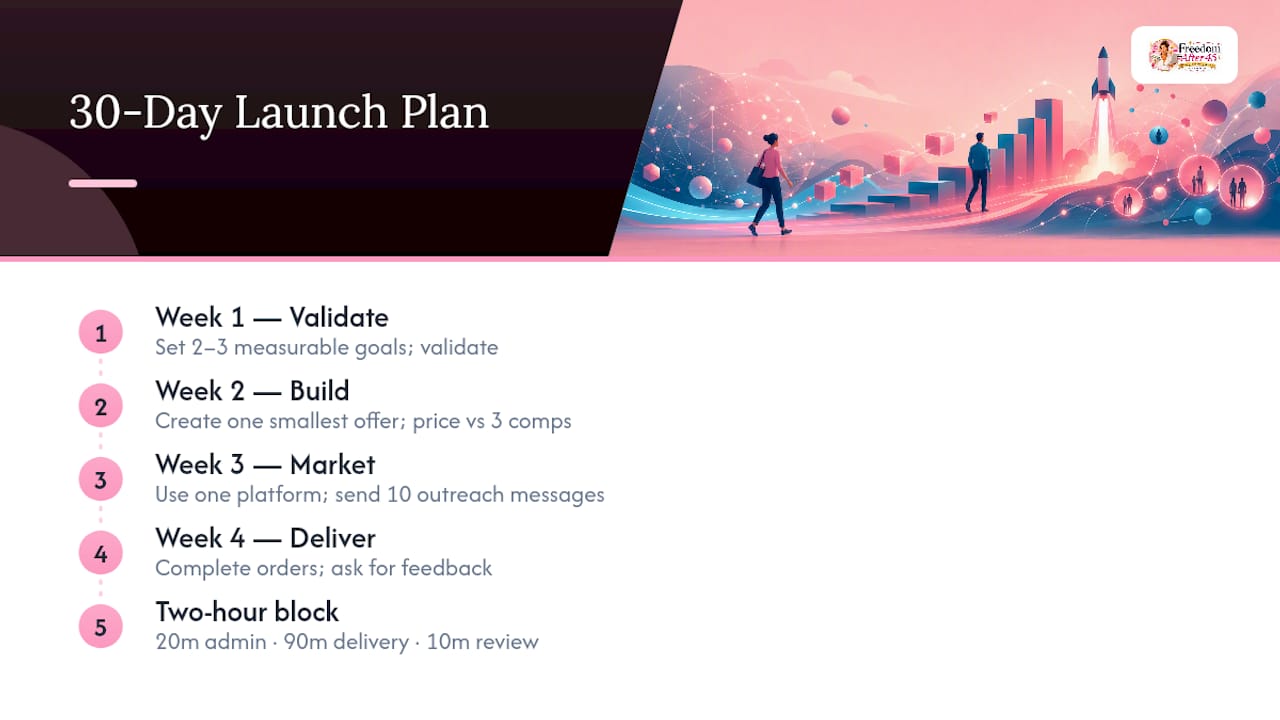
Pro Tip: Time-box everything into two-hour blocks: 20 minutes for admin and messages, 90 minutes for the actual work (writing, designing, client delivery), and 10 minutes to jot down what worked. This keeps a part-time schedule from quietly turning into a second full-time job.
What Legal and Tax Steps Do You Need to Take?
Most part-time online businesses start as sole proprietorships by default. You don’t need to file anything special to begin, but you do need to report the income. If your side business earns a profit, you’ll report it on Schedule C (Form 1040), which covers profit or loss from a sole proprietorship. Consider getting an Employer Identification Number if you plan to hire help, open a business bank account, or simply want to avoid using your Social Security number on client paperwork.
Keep bookkeeping simple from day one:
- Track every expense tied to the business, including software subscriptions, a portion of your phone bill, and any paid advertising.
- Save receipts digitally as you go rather than hunting for them at tax time.
- Set aside time monthly, not just once a year, to reconcile income and expenses.
- Separate business and personal spending with even a basic dedicated account.
Some ideas carry extra requirements. If you’re selling homemade food products, check your state’s cottage-food laws before you list a single item, since rules vary widely by state. Tutoring, bookkeeping, and consulting rarely require special licensing, but local business permits sometimes apply even to home-based work.
The SBA’s guide to planning a business walks through the basics of structuring a home-based venture step by step, and it’s worth the 20 minutes it takes to read before you take on your first paying client.
How the 2-Hour Workflow Fits This Roadmap
Everything in this article, picking an idea, validating it, launching in 30 days, works better with a structured system behind it. That’s the gap the 2-Hour Workflow from Freedom After 45 is built to fill: a time-boxed approach designed around two hours a day rather than a full-time hustle.
The program doesn’t require an existing social media following or a product you’ve already built, which removes two of the biggest barriers people run into when they try the ideas covered above. Instead, it walks through a step-by-step blueprint meant to reduce the overwhelm that often comes with starting something new later in life.
What the program includes:
- A downloadable workflow blueprint laying out the process step by step
- Video instructions covering each stage of setup
- Templates designed to help reduce trial-and-error
- Access to a community for support and accountability
It’s built especially for women over 45 who want a defined system rather than a patchwork of blog posts and YouTube tutorials, though the time-boxed structure works for anyone juggling a full-time job. Think of it as one option among the paths this article covers, not a guaranteed outcome. The value is in the structure it gives you, not in any promise about what you’ll earn.
Growth That Lasts Beats Growth That Burns You Out
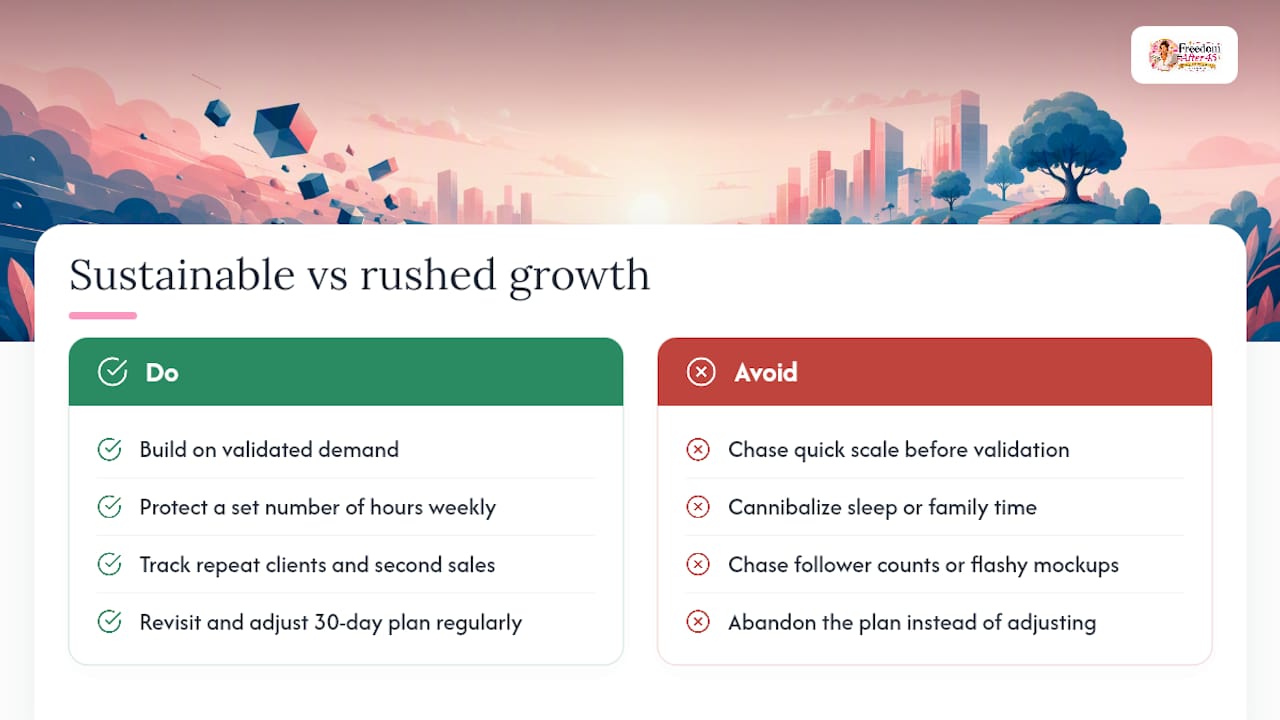
Most people planning a part-time business assume faster is better. It usually isn’t. The side businesses that survive past month three are the ones built on validated demand and a schedule that doesn’t cannibalize sleep or family time. Chasing quick scale before you’ve confirmed anyone wants what you’re selling is how good ideas turn into expensive lessons.
Protect a set number of hours each week and defend them the way you’d defend a work meeting. Progress that matters isn’t a follower count or a flashy mockup. It’s a repeat client, a second sale from the same buyer, a message that says “this actually helped me.” Revisit the 30-day plan every few months. What worked at hour five of your business rarely works the same way at hour fifty, and adjusting the plan beats abandoning it.
— Freedom After 45
Ready for a Guided, Time-Boxed Way to Start?
Every idea in this article works. What most people actually struggle with isn’t the idea, it’s sticking to a system long enough to see if it works. The 2-Hour Workflow exists for exactly that gap: a guided, step-by-step plan built for women 45 and older who want structure instead of guesswork, without needing a following or a product already built.

The program bundles a downloadable blueprint, video lessons, ready-made templates, and access to a support community, all built around the same two-hour daily commitment this article recommends. It’s designed to walk you through validation, offer-building, and delivery in a defined order rather than leaving you to piece it together from scattered advice. There are no specific earnings promises here, and there shouldn’t be. What you get is a clear structure to follow and people to lean on while you follow it. If that’s the missing piece in your own 30-day plan, you can check out the 2-Hour Workflow and see whether the format fits how you want to work.
Where to Go Next for Planning and Tax Help
A few outside resources are worth bookmarking as you move from idea to launch. The SBA’s business planning guide covers the fundamentals of structuring a home-based venture, including permits and local rules. The IRS Schedule C page explains exactly how sole proprietors report income and expenses come tax season. Shopify’s roundup of part-time business ideas offers additional inspiration if none of the options above feel like the right fit. And Forbes’s coverage of flexible online side careers digs deeper into service-based roles like virtual assistant work and tutoring.
Sources
- Plan your business | SBA
- About Schedule C (Form 1040), Profit or Loss From Business (Sole Proprietorship) | Internal Revenue Service
- 24 Part-Time Business Ideas To Start in 2026 - Shopify
- 5 flexible online side careers to earn extra income in 2026 | Forbes
FAQ
How Can I Make an Extra $1,000 a Month Online?
Stacking two or three part-time income sources, like freelance work plus a digital product, tends to get you there faster than relying on a single idea. Focus first on service-based work since it converts hours into income faster than content or ecommerce models that need time to build traction.
How Can I Make $500 a Week Part-Time?
This usually requires 10 to 15 hours a week in higher-rate service work like bookkeeping, tutoring, or freelance writing, where you’re billing directly for your time rather than waiting on ad revenue or slow-building sales. Raising your rate once you have a few solid client testimonials moves you toward that number faster than adding more clients at a lower rate.
How Can I Make $300 a Day Online?
Hitting a daily number like this consistently is far harder than a weekly or monthly target, and it typically means running multiple income streams or landing higher-ticket freelance or consulting projects. A structured system, like the 2-Hour Workflow, can help you organize the daily habits and offer-building steps that make consistent income more achievable over time, though no program can guarantee a specific outcome.
How Can I Make $2,000 a Month Working From Home?
This generally means combining a couple of the ideas covered above, such as a handful of recurring bookkeeping or VA clients alongside a digital product selling in the background. Shopify’s research notes that many side hustles need five to ten hours a week to start generating meaningful income, so treat month one and two as your validation window before expecting consistent numbers.
Is It Safe to Start a Side Business While Employed Full-Time?
Yes, as long as you check your employment contract for non-compete or moonlighting clauses first, since some employers restrict outside work in the same industry. Keeping the business separate from company time, equipment, and clients avoids most conflict-of-interest issues entirely.