

90 Day Affiliate Marketing Plan for Beginners With No Audience
Yes, you can start affiliate marketing with no audience. The fastest route is publishing one decision-stage page that matches what a buyer is already searching for, then capturing emails through a single landing page. Pick one channel today, whether that’s a search-first blog post or a Pinterest pin, built around one narrow, high-intent keyword. That single move gets you further than months of trying to grow followers first.
TL;DR:Building a dedicated landing page targeting a narrow, high-intent keyword typically generates the fastest results, often within a few months.Prioritizing owned assets like email lists and SEO content over social followers ensures long-term earnings and protection against platform rule changes.Digital and educational affiliate programs with recurring or high-ticket payouts are more viable for beginners than low-margin retail products.Conversion depends on well-structured content with clear verdicts, direct calls-to-action, and trust-building tips, not just traffic volume.Success relies on proper sequencing: setting up landing pages and email lists first, then creating targeted content and applying to suitable programs.
Freedom After 45Build Income Around Two HoursFreedom After 45 offers a step-by-step 2-Hour Workflow blueprint for women over 45 seeking recurring income without traditional barriers.Explore the 2-Hour Workflow
Table of Contents
- What Is No Audience Affiliate Marketing?
- What Does a 90-Day Affiliate Marketing Launch Plan Look Like?
- Which Channels Actually Work Without Followers?
- Which Affiliate Programs Work Best for Beginners?
- How Do You Convert Traffic Without Followers?
- How the 2-Hour Workflow Fits Into a No-Follower Strategy
- Why the Real Bottleneck Isn’t Traffic, It’s Sequencing
- Where to Go Next If You Want a Guided Path
- Sources
- FAQ
What Is No Audience Affiliate Marketing?
No audience affiliate marketing means earning commissions by matching content to buyer intent instead of relying on an existing following. You don’t need thousands of Instagram followers or a YouTube subscriber count to get paid. You need a page that answers a specific question better than the ten results already ranking for it, and a way to send that page’s traffic somewhere it converts.
This is a real shift from how affiliate marketing got sold a decade ago. Back then, the advice was: build a following, then monetize it. Search engines and platforms like Pinterest and YouTube now reward usefulness over popularity, which means a brand-new site with zero social presence can rank for a specific buying question and start earning within months, not years. The Post Affiliate Pro industry research backs this up: successful affiliate content rewards the best answer to a specific question, not viral reach.
Here’s the minimum setup you need before publishing anything.
- A landing page or simple site. One page that hosts your content and one page that captures emails is enough to start.
- An email provider. Free tiers from most providers handle a few hundred subscribers, which is plenty for month one.
- Basic tracking. A free analytics tool and UTM tags on your affiliate links tell you what’s actually working.
Once that’s live, prioritize channels by how long they last. An SEO blog post can rank and earn for years with occasional updates. An email list you own outright, and no algorithm change can take it from you. Pinterest pins have a long shelf life compared to most social content. Faceless YouTube videos can rank in search for months. Niche communities like forums or Reddit threads take almost no setup but need real participation, not drive-by links. Paid ads come last, only after you know your conversion numbers well enough to spend money without guessing.
Pro Tip: Build your email opt-in page before you publish your first piece of content. Every visitor who leaves without subscribing is a visitor you paid for (in time) and lost forever. The beehiiv research on list building makes the case plainly: an owned list is your insurance against platform changes.
What Does a 90-Day Affiliate Marketing Launch Plan Look Like?
A realistic plan breaks into phases: setup, publishing, and optimization. Nobody earns commissions immediately, and pretending otherwise sets you up to quit too early.
Weeks 1 and 2: Foundation. Set up your landing page, choose your email provider, and pick a niche narrow enough that you can become genuinely useful in it fast. Build a keyword list of decision-stage terms, phrases like “best X for Y” or “X vs Z for beginners,” where the searcher is close to buying. Draft your lead magnet, a checklist, template, or short guide that solves one specific problem your niche has.
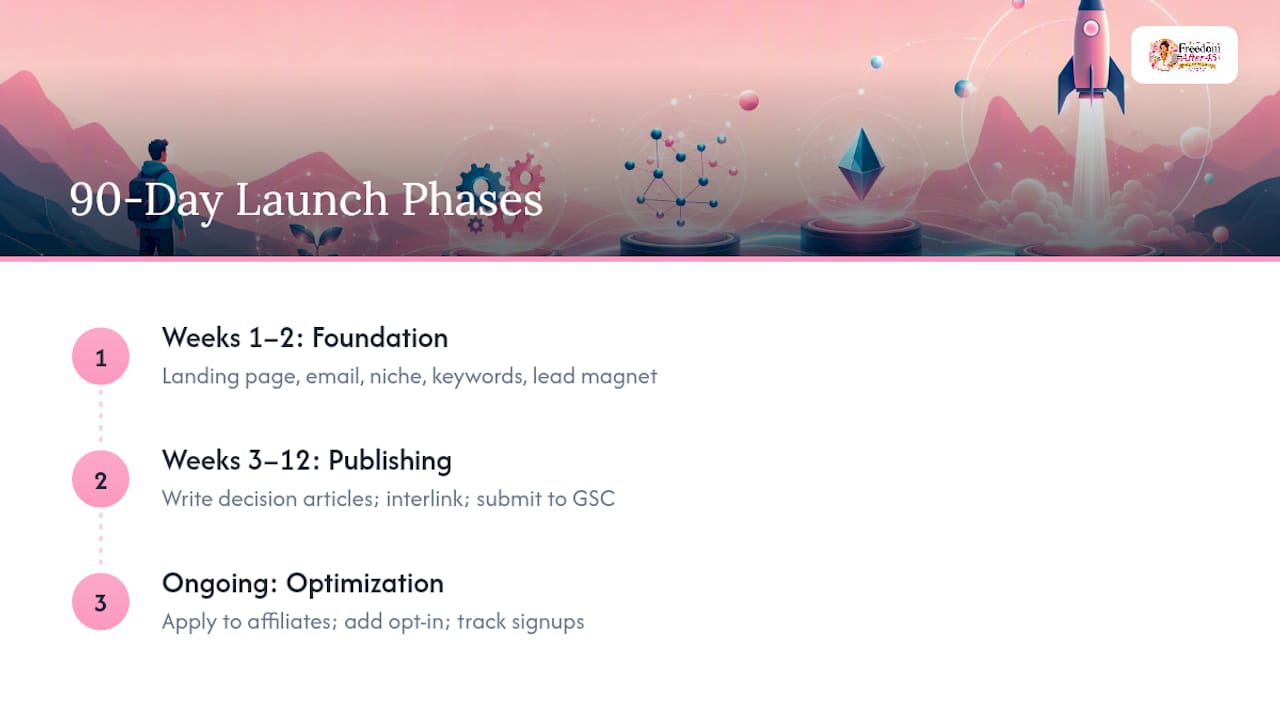
Weeks 3 through 12: Publishing. This is where the real work happens. A workable target is several decision-stage articles: best-of roundups, product comparisons, honest reviews, and “alternatives to X” posts. These formats convert because the reader is already shopping, not just browsing. Interlink every new post to your older ones and to your lead magnet page.
Publish posts regularly, with the frequency depending on what your schedule allows. 2. Submit your best five posts to Google Search Console as soon as they’re live to speed up indexing. 3. Apply to two or three affiliate programs once you have five published posts and a working landing page. 4. Add your lead magnet opt-in to every post, not just a homepage sidebar.
Track these milestones instead of vague progress: posts indexed by Google, first organic clicks in Search Console, affiliate program approvals, and first email signups. First commissions tend to land in the 3 to 6 month range for search-first strategies, according to Affiliates Haven’s timeline research, so don’t panic if month one shows zero sales. Month one is for indexing, not income.
Which Channels Actually Work Without Followers?
Different channels need different tactics, and mixing up the approach is the fastest way to waste effort.
SEO blog content works best when you target long-tail, high-intent keywords instead of broad, competitive terms. A post titled “Best Budget Standing Desk Under $300” will outrank a general “best standing desks” post for a new site, because the competition is thinner and the buyer is closer to purchasing. Structure each post as a quick verdict up top, a comparison table in the middle, and a clear “how to buy” section at the end.
- Faceless YouTube: Use screen recordings, stock footage, or slideshow-style videos with voiceover. Research keywords using YouTube’s own autocomplete, and put your affiliate link in the first two lines of the description, above the fold.
- Pinterest: Create vertical images (1000x1500 pixels works well) with text overlay that states the benefit, not just the product name. Write pin descriptions using the same keywords you’d target in a Google search.
- Email and landing pages: Match your lead magnet directly to your affiliate offer. If you promote budgeting software, offer a free spending tracker template, then follow up with a 3 to 5 email sequence that builds toward a recommendation.
- Communities: Answer questions in forums and subreddits genuinely, for weeks, before you ever link to your own content. Trust gets built before links get clicked.
The Systeme makes a fair point here: you technically don’t need a website to start, but leaning entirely on rented platforms leaves you exposed if a platform changes its rules overnight.
Which Affiliate Programs Work Best for Beginners?
Not every affiliate program treats beginners the same way, and the ones with the friendliest approval process aren’t always the best financial fit. Prioritize programs by durability and payout structure, not just how fast they approve you.
- Favor recurring commissions or high-ticket digital products over one-time payouts on cheap physical goods.
- Digital and educational offers often pay 30% to 50% commission, compared to 2% to 10% on typical retail products, according to Rewardful’s commission data.
- Check approval requirements before applying. Some programs require a “qualifying property,” meaning an active site with real content, before they’ll accept you.
- Look for networks that explicitly accept landing pages or small sites instead of requiring a large existing following.
- Qualify yourself with a clean, working site, a clear disclosure statement, and five to eight published posts as a sample of your work.
Retail affiliate programs feel appealing because approval is instant, but the math rarely favors a small new site. A $50 item at 4% commission pays $2. A $50-a-month subscription at 40% recurring commission pays $20 every single month that customer stays subscribed. Volume matters less when the per-sale value is higher.
How Do You Convert Traffic Without Followers?
Small traffic numbers can still produce real commissions if the page itself is built to convert, not just to inform.
A converting post needs four parts in this order: a clear verdict near the top so skimmers get an answer fast, a short comparison (table or bullet list) for people evaluating options, a direct call-to-action with your affiliate link, and a few practical buyer tips (sizing, common mistakes, what to check before purchase) that build trust before the click.
- Gate your best lead magnet behind an email opt-in that matches the topic of the post it sits on, not a generic “subscribe to my newsletter” box.
- Tag every affiliate link with UTM parameters so you know which post, which button, and which channel actually drove the click.
- Test one headline variation at a time; changing five things at once tells you nothing about what worked.
- Check your affiliate dashboard weekly, not daily. Daily checks on low traffic just create anxiety over noise.
Disclosure isn’t optional. A simple line near the top of the post, something like “This post contains affiliate links. If you buy through them, I may earn a commission at no extra cost to you,” satisfies the basic requirement and builds reader trust at the same time.
Pro Tip: Rewrite your call-to-action button text to match the reader’s next action, not a generic “click here.” “See Current Price” or “Check Availability” converts better than a vague button because it tells the reader exactly what happens next.
How the 2-Hour Workflow Fits Into a No-Follower Strategy
Everything above works, but doing it alone, without a clear order of operations, is where most beginners stall out. That’s the gap Freedom After 45 built the 2-Hour Workflow to close: a structured, time-boxed blueprint that lays out what to do in a focused two-hour block instead of leaving you to guess which task matters most on any given day.
- The blueprint is designed around a step-by-step format, so you’re never staring at a blank page wondering where to start.
- It includes video instructions and case studies from the program’s community, giving newer marketers additional resources beyond theory.
- It’s built for people without an existing social following or product, the exact starting position this article assumes.
- A support community is available for troubleshooting and accountability as you work through the plan.
Learners who benefit most are the ones who’ve read plenty of free advice but still feel stuck sequencing it. A structured path removes the decision fatigue of figuring out what to do first, which is often the real barrier, not lack of information.
Why the Real Bottleneck Isn’t Traffic, It’s Sequencing
Most advice about affiliate marketing without an audience obsesses over traffic sources, which channel, which platform, which algorithm trick. That’s the wrong fixation. The research supports a different conclusion: the beginners who succeed aren’t the ones who find a secret traffic hack. They’re the ones who do the boring setup work in the right order and stick with it past the point where results still look like zero.
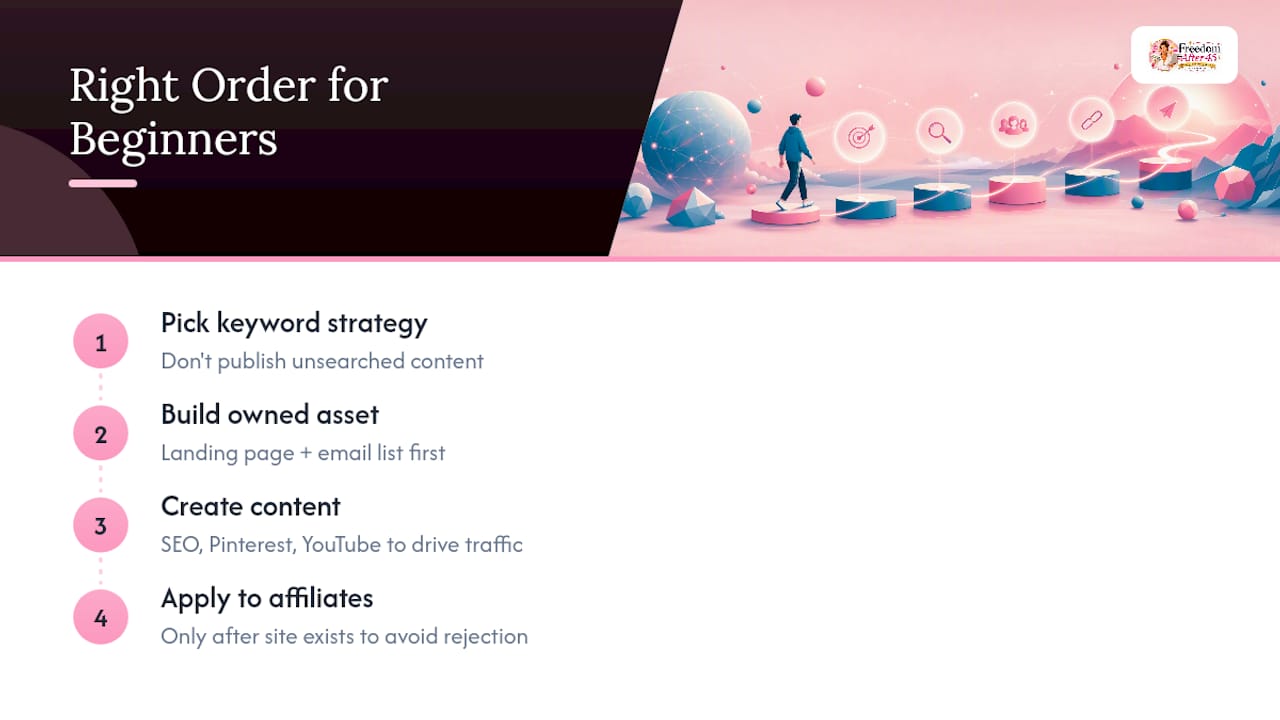
Conventional wisdom tells beginners to “just start creating content,” which sounds motivating but skips the sequencing question entirely. Publish before you’ve picked a keyword strategy and you waste your first month on content nobody’s searching for. Chase an affiliate program before your site exists and you get rejected for having no qualifying property. The order of operations matters as much as the effort itself.
If you take one thing from this article, prioritize the owned asset, your landing page and email list, before you spend another hour on content. Everything else, the SEO posts, the Pinterest pins, the YouTube videos, feeds traffic toward that owned asset. Skip that step and you’re building on rented land the whole time.
— Freedom After 45
Where to Go Next If You Want a Guided Path
Everything in this article works as a self-directed plan, but plenty of readers get through week two and realize they want a clearer hand to hold. That’s a normal reaction to a plan with a lot of moving parts. If you’re one of them, Freedom After 45 built the 2-Hour Workflow specifically to remove the guesswork this article just walked you through.

The 2-Hour Workflow gives you the step-by-step blueprint, video lessons, and a support community in one place, so instead of piecing together a strategy from a dozen articles, you follow a sequence that’s already been laid out for you. It complements the free 90-day plan above rather than replacing it: think of it as the templates and accountability layer that turns a plan you read into a plan you actually finish. No existing social following or product required to start. Check out the 2-Hour Workflow to see whether the structured version fits how you learn best.
Sources
- Post Affiliate Pro blog (affiliate marketing industry size/insight)
- beehiiv blog on mailing list sign-ups
- Rewardful affiliate marketing statistics article
- Systeme
FAQ
Can You Do Affiliate Marketing Without an Audience?
Yes. Search-first content, Pinterest, and faceless YouTube videos let you reach buyers through intent rather than an existing following, and a new site can start ranking for specific, low-competition keywords within a few months.
Can You Make $10,000 a Month With Affiliate Marketing?
Results vary enormously based on niche, commission structure, and traffic volume, and no legitimate source can promise a specific income figure. Focus on the fundamentals of intent-matched content and recurring commissions rather than chasing a target number.
Can I Do Faceless Affiliate Marketing?
Yes. Faceless YouTube videos using screen recordings or slideshow formats, along with Pinterest pins and written blog content, let you build an affiliate business without ever appearing on camera.
Which Affiliate Program Is Best for Beginners?
Programs in digital and educational categories often pay 30% to 50% commission versus 2% to 10% for physical retail, according to Rewardful’s data, and many accept landing pages or small sites without requiring a follower minimum.
How Long Before I See My First Commission?
Search-first strategies commonly produce first meaningful commissions in the 3 to 6 month range, based on Affiliates Haven’s research, since ranking and building trust with readers both take time.