

Real 2026 ROI for Women 45+: Is Affiliate Marketing Worth It?
Affiliate marketing can be worthwhile for those who approach it as a real business and exercise patience for income to develop over months. It rewards patient builders who pick a focused niche, publish content backed by actual experience, and build an owned audience through email. It punishes people looking for fast cash with no content skills and no budget for the slow ramp-up.
TL;DR:Affiliate marketing requires patience and consistent effort, especially in building traffic and an owned audience through email marketing.Most affiliates earn less than $1,000 a month initially, with higher earnings often linked to long-term commitment and diversified traffic channels.Recurring commissions from SaaS and online courses tend to outperform one-time retail payouts, making long-term income more feasible.Building organic traffic takes months, and search engine updates can abruptly reduce visibility; original testing and audience building mitigate this risk.Success depends on selecting a niche with recurring revenue, focusing on one channel you already excel in, and maintaining compliance with legal and tax obligations.
Freedom After 45Build Your Income With StructureFreedom After 45 shares a step-by-step 2-Hour Workflow blueprint for women over 45 seeking recurring income without traditional barriers.Explore the 2-Hour Workflow
Table of Contents
- Is Affiliate Marketing Worth It? Weighing the Pros and Cons
- What Is the Realistic Affiliate Marketing Success Rate?
- How Long Does It Take to Make Money With Affiliate Marketing?
- Which Traffic Channel Should You Start With?
- Which Niches and Commission Types Perform Best?
- Legal and Tax Rules Every Affiliate Needs to Know
- How Do You Spot Affiliate Marketing Scams?
- Should You Start Affiliate Marketing? A Quick Self-Check
- Freedom After 45’s Take on the 2-Hour Workflow
- The Bottom Line on Affiliate Marketing
- A Guided Path if You Want Structure, Not Guesswork
- Sources
- FAQ
Is Affiliate Marketing Worth It? Weighing the Pros and Cons
Affiliate marketing still works in 2026, but the version that works looks different from the “post a link and wait” model people imagine. Industry spend backs that up: affiliate program investment climbed significantly in recent years, with industry forecasts pointing to continued growth through 2028 (https://www.hostinger.com/tutorials/is-affiliate-marketing-worth-it/). Brands keep funding these programs because they only pay when a sale happens, which is exactly why the opportunity persists even as competition thickens.
The upside is real and specific. Start-up costs are lower than almost any other online business model: no inventory, no manufacturing, no shipping. You can launch a niche site or a YouTube channel for the price of hosting and a domain name. Commission structures also matter more than most beginners realize. A one-time $50 payout on a $500 sale feels good once. A $30-per-month recurring commission from a SaaS referral who stays subscribed for two years pays out $720, and it keeps paying while you sleep.
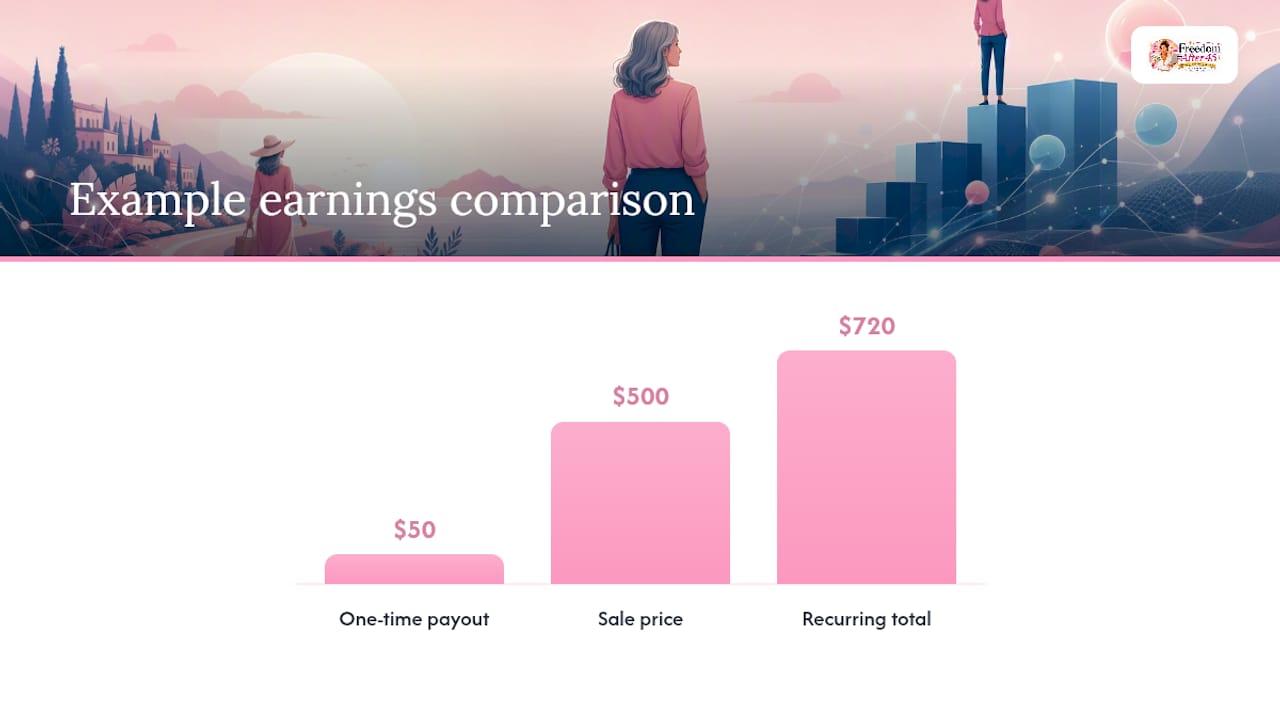
Pro Tip: Before joining any program, check whether it pays recurring commissions or a single flat fee. That one detail can double your lifetime earnings from the same referral.
The costs are just as real, though, and they rarely show up in the pitch decks:
- Traffic takes time to build. Search engines do not reward brand-new sites quickly, and social platforms bury accounts with no history.
- Content creation is a genuine skill investment. Writing a review that actually converts takes hours of research and testing, not a quick paraphrase of a product page.
- Income is commission-dependent. No sale, no paycheck. There is no salary floor.
- Platform risk is constant. A Google algorithm update or a policy change can flatten your traffic overnight.
That last point deserves weight. Google’s Helpful Content updates have specifically targeted thin, AI-generated reviews that show no evidence the writer ever touched the product. Affiliates who publish original testing and build an audience that returns on its own, rather than one entirely dependent on search rankings, are the ones still standing after each update.
What Is the Realistic Affiliate Marketing Success Rate?
Most affiliates earn far less than the success stories suggest, and the gap between median and top-tier income is enormous. A 2026 survey of more than 1,000 active affiliates found that a large share earn under $1,000 a month, while a smaller group of committed, niche-focused publishers report substantially higher earnings by relying on email and hybrid traffic strategies instead of a single channel.
That spread is not random. It tracks almost exactly with how long someone has stuck with it and whether they built an audience they own.
Statistic Callout: A 2026 survey found affiliates combining email marketing with other channels tend to earn more than single-channel affiliates, regardless of niche.
A few patterns show up across income brackets:
- First-year affiliates often earn little to nothing for the first three to six months while content indexes and trust builds.
- Affiliates in year two or three, who kept publishing and built an email list, tend to see the steepest income jumps, not the affiliates just starting out.
- Recurring-commission niches like SaaS and online education compound faster than one-time-payout retail niches, because the income from month one keeps paying in month twelve.
- The six-figure “I quit my job” stories that circulate on social media are almost always outliers, often the top 1 to 2 percent of a much larger, quieter pool of moderate earners.
Is affiliate marketing still profitable for a typical beginner? Yes, but “profitable” in year one usually means covering hosting costs and maybe a part-time grocery bill, not a career replacement. The people who eventually see four- and five-figure months got there by treating the first year as an investment period, not a payday.
How Long Does It Take to Make Money With Affiliate Marketing?
Expect a slow start followed by a compounding middle, not a straight line upward. Here is a rough shape of how it plays out across the most common paths:
- Weeks 1 to 8: Content goes live, but traffic is minimal. This is setup and indexing time, not income time.
- Months 2 to 6: First clicks and occasional sales appear, usually from long-tail search terms or a video that catches unexpected traction.
- Months 6 to 12: A “steady month” emerges, meaning consistent (if modest) monthly income that does not require a lucky viral hit.
- Year 2 and beyond: Compounding kicks in as older content keeps ranking, email subscribers keep buying, and recurring commissions from earlier referrals stack on top of new ones.
Time commitment varies by ambition. Part-time affiliates who treat this as a side project typically invest 5 to 15 hours a week, mostly in content creation and outreach. Full-time affiliates, or those trying to replace an income within 18 months, tend to put in 20 or more hours weekly, split between content, testing offers, and list building.
Plateaus are normal and predictable. Traffic often stalls around month four or five, right when initial excitement wears off, which is exactly when a lot of people quit. The affiliates who break through usually do one of two things: they launch a lead magnet to start an email list, or they diversify into a second content format, like turning blog posts into short videos.
Pro Tip: Start collecting emails early; even a smaller engaged subscriber list can outperform larger but less engaged visitor counts.
Which Traffic Channel Should You Start With?
The right starting channel depends on your skills, budget, and patience, not on whatever is trending. Each one converts differently and carries different risk.
- SEO (search): Durable once established, but slow. Google increasingly rewards demonstrated first-hand experience over generic summaries, so this path requires genuine product testing, not just keyword research.
- Video (YouTube, TikTok): Faster discovery than SEO, especially when you pair short-form clips for reach with a longer YouTube review for conversion. Video-first affiliates who repurpose one product narrative across formats tend to see stronger conversion than single-format creators.
- Paid ads: The fastest way to test whether an offer converts, but also the channel with the highest early failure rate, since you are spending real money before you know your funnel works.
- Email: Slower to build but the most resilient channel, because it is the one platform outage or algorithm change cannot take from you.
Hybrid approaches consistently outperform single-channel strategies, and paid traffic plus email, or SEO plus email, shows up repeatedly among affiliates who survive past year one. If you’re weighing affiliate marketing vs traditional marketing, this is the real difference: traditional marketing often demands upfront ad budgets before you see a dollar back, while a well-run affiliate funnel lets content and email compound value over time with a smaller initial outlay.
Pro Tip: If you have to pick just one channel to start, pick the one that matches a skill you already have. A confident talker should try video before attempting long-form SEO writing.
Which Niches and Commission Types Perform Best?
SaaS and e-learning products tend to outperform one-time purchase retail niches due to recurring commissions and longer customer lifetime value. Recurring commissions compound as long as the referred customer stays subscribed, which means ten referrals from six months ago can still be generating income today.
That said, high-ticket physical products (think home fitness equipment or premium electronics) can outperform low-ticket retail on a per-sale basis, even without recurring payouts, simply because a 5% commission on a $2,000 item beats a 5% commission on a $40 item every time. The trade-off is volume: high-ticket items convert less often.
The smartest way to evaluate any niche is by earnings per click (EPC), not by the advertised commission rate. A program advertising a 20% commission but converting poorly will underperform a 10% commission program with a well-optimized funnel. EPC and funnel reliability consistently beat headline commission rates when experienced affiliates choose which programs to promote.
Categories that tend to outperform in 2026 data include:
- Software and SaaS tools with monthly recurring billing
- Online courses and certification programs with high perceived value
- Health and wellness subscriptions with repeat purchase cycles
- Financial tools and services where buyer intent is already high
Legal and Tax Rules Every Affiliate Needs to Know
Affiliate income is taxable, and the Federal Trade Commission requires clear disclosure of paid relationships on every piece of promotional content. Neither rule is optional, and both carry real financial consequences if ignored.
FTC rules require that disclosures be “clear and conspicuous,” meaning a disclosure buried in a footer or hidden behind a “read more” link does not count. It needs to appear near the affiliate link itself, in language an average reader would immediately understand, like “This post contains affiliate links, and I may earn a commission.” Unsubstantiated claims or hidden compensation can trigger enforcement action, and penalties for repeated violations can run into thousands of dollars per infraction.
Statistic Callout: Affiliate income is considered self-employment income in the U.S. and must be reported accordingly with applicable self-employment taxes.
A basic compliance checklist for anyone starting out:
- Add a clear affiliate disclosure near every affiliate link, not just in a general disclaimer page.
- Track every 1099 form from affiliate networks and merchants, since income over certain thresholds gets reported to the IRS directly.
- Set aside a portion of every payout for quarterly estimated tax payments to avoid a penalty at filing time.
- Maintain a basic privacy and cookie notice if your site uses tracking pixels or affiliate cookies.
- Keep records of all commissions, expenses, and correspondence with affiliate managers in case of an audit.
None of this is optional busywork. It is the difference between running a legitimate business and running an unlicensed side hustle that catches up with you at tax season.
How Do You Spot Affiliate Marketing Scams?
Is affiliate marketing legit, or is it mostly hype sold by people who profit from teaching it rather than doing it? Both things are true at once, and the skill is telling the difference before you spend money.
Red flags worth walking away from immediately:
- Any program charging an upfront fee just to become an affiliate. Legitimate merchants pay you; they do not charge you to promote them.
- Payout claims that are impossible to verify, especially screenshots with no context, dates, or matched traffic data.
- High-pressure sales tactics pushing you to buy a course “before the price goes up tonight.”
- Courses that spend more time selling the dream of affiliate income than teaching the actual mechanics of traffic and conversion.
Before joining any network or program, check its payment history in independent affiliate forums, confirm it pays on a fixed schedule, and search for its name alongside the word “complaints” before signing up. Some of the loudest affiliate success stories originate from people whose real income comes from selling courses about affiliate marketing, not from affiliate commissions themselves. That does not make every course a scam, but it means the pitch and the product are not always the same thing.
Free and low-cost starting points exist. Most major affiliate networks are free to join, and platform-provided documentation covers the basics without a purchase required.
Should You Start Affiliate Marketing? A Quick Self-Check
Answer these honestly before committing any real time or money.
- Do you have at least 5 to 10 hours a week available for the next six months, minimum?
- Are you comfortable creating content (writing, video, or both) even before you see any income?
- Can you emotionally and financially tolerate zero income for three to six months while things build?
- Do you have even a small budget ($100 to $300) to test paid traffic or basic tools, or are you starting purely organic?
| Your profile | Suggested first project | Realistic first-year checkpoint |
|---|---|---|
| Limited time, strong writer | Niche blog with SEO focus | First affiliate sale by month 3 to 4 |
| Comfortable on camera | Video-first channel (YouTube/TikTok) | Steady monthly income by month 6 to 12 |
| Some ad budget, wants speed | Paid traffic tester with a landing page | Break-even on ad spend by month 2 to 3 |
| No time for content creation | This path likely is not a fit right now | Reassess when time availability changes |
A realistic first-year goal is not “quit your job.” It is proving you can generate one consistent, repeatable sale a month by month six, then scaling what worked.
Freedom After 45’s Take on the 2-Hour Workflow
The 2-Hour Workflow was designed specifically for women over 45 who find it challenging to figure out SEO, video editing, and email funnels on their own while managing other responsibilities.
That is the exact problem a time-boxed system solves. Instead of open-ended trial and error, the workflow condenses the daily actions that move the needle into a two-hour block: no guessing which channel to pick first, no wondering whether you’re wasting a month on the wrong niche. It includes step-by-step video instructions, case studies, and a community for support rather than having to navigate alone.
The timeline and plateau issues covered earlier in this article, the ones that make people quit around month four or five, are exactly what a structured, time-limited blueprint is designed to prevent. When you know what to do in your two hours today, tomorrow, and next week, the slow early months feel like progress instead of confusion.
You can find the full breakdown of the 2-Hour Workflow on the program’s landing page.
The Bottom Line on Affiliate Marketing
Affiliate marketing is worth it for people willing to treat it like a real, slow-building business rather than a lottery ticket. It is not worth it for anyone expecting fast cash with minimal effort or unwilling to publish consistently for six months before seeing traction.
If you are starting from scratch, three things matter more than anything else: pick one channel and commit to it for at least three months, start an email list before you think you need one, and choose recurring-commission niches over one-time payouts wherever your niche allows it.
The one caution worth repeating: nobody succeeds at this by accident, and anyone promising otherwise is selling something other than affiliate marketing.
— Freedom After 45
A Guided Path if You Want Structure, Not Guesswork
Everything in this article points to one conclusion: affiliates who follow a clear, repeatable process outperform those piecing it together alone. That is the specific gap the 2-Hour Workflow was built to close for women over 45 who want daily income potential without needing an existing following or a product of their own.

This program bundles elements into a guided sequence: a focused daily structure, templates to facilitate content creation, and community support for people working through similar milestones. It complements the self-check above directly. If your answers pointed toward “I have the time but not the roadmap,” this fills that exact gap.
Pricing and full program details are available on the 2-Hour Workflow landing page, where you can see what the first steps look like before you commit to anything.
Sources
The 2026 State of Affiliate Marketing survey polled over 1,000 active affiliates and anchors the income ranges and channel data throughout this article. LegalClarity’s breakdown of FTC and IRS rules covers the compliance requirements every U.S. affiliate needs. Hostinger’s market analysis documents the industry ad spend growth cited above. EarnifyHub’s 2026 outlook explains how search algorithm changes are reshaping what successful affiliate content looks like.
This article is general information, not a substitute for advice from a qualified financial advisor. Consult a qualified financial professional about your own circumstances before acting on anything here.
- State of Affiliate Marketing 2026: Survey of 1,000+ Affiliates
- Is affiliate marketing legal? How to comply with the law
- Is Affiliate Marketing Still Worth It in 2026? AI | EarnifyHub
FAQ
Can You Make $10,000 a Month With Affiliate Marketing?
It is possible but represents a small fraction of active affiliates. Most who reach that level did so after multiple years, a diversified traffic mix, and recurring-commission niches like SaaS, not overnight.
Which Affiliate Program Is Best for Beginners?
There is no single best program, but beginners generally do better starting with programs in a niche they already understand, checking for recurring commissions and a strong EPC, rather than chasing the highest advertised commission rate.
Can People Really Make Money With Affiliate Marketing?
Yes, but the 2026 industry survey shows most affiliates earn under $1,000 a month, while a smaller group of committed, niche-focused publishers earn substantially more by combining email with other channels.
What Is the Downside of Affiliate Marketing?
The main downsides are a slow ramp-up before any income appears, total dependence on commissions with no salary floor, and vulnerability to search engine or platform algorithm changes that can cut traffic overnight.
How Do I Know if Affiliate Marketing Is Right for Me?
If you can commit 5 or more hours weekly for at least six months and tolerate limited income during that period, it is worth trying. If you need income within weeks, a guided system like the 2-Hour Workflow may fit better than building an audience from zero.