

Why Students Can Earn $100 Daily Online: Real Methods
Earning $100 daily online as a student is achievable through task-based and session-based roles like tutoring, gig work, content writing, and virtual assistance that pay immediately and flex around class schedules. These are not passive income fantasies. They are structured earning models where your free time converts directly into cash, with no degree, no prior experience, and no social media following required. Platforms like Internshala list entry-level roles in transcription, data entry, and social media management that students can start within days. The question is not whether the income is possible. The question is which method fits your schedule and how to run it like a professional.
Why students can earn $100 daily online through flexible roles
The core reason why students can earn $100 daily online comes down to pay structure. Pay-per-session and pay-per-task roles translate free time directly into earnings without waiting for long-term monetization cycles. Every hour you work produces a measurable return, which is exactly what a student with a two-hour window between classes needs.

Tutoring is the clearest example. Clemson University tutoring roles pay $13.00 to $18.00 per hour with flexible one-hour sessions scheduled between 3:00 and 7:30 pm. At $18 per hour, six back-to-back sessions produce $108 before fees. That is a realistic daily target for a student who books consistently and shows up prepared.
Beyond tutoring, the range of online jobs for students is wider than most realize:
- Content writing and blogging: Platforms like Internshala and Upwork list entry-level writing gigs paying $10 to $25 per article, with faster turnaround rewarding higher daily volume.
- Video editing and transcription: Entry-level roles in video editing and transcription offer flexible timing and build portfolio-worthy skills simultaneously.
- Micro-task and survey platforms: These pay less per unit but require zero skill barrier, making them useful for filling 20-minute gaps between study blocks.
- Social media management: Small businesses regularly hire students to manage Instagram or LinkedIn accounts for $300 to $600 per month per client, which averages out to $10 to $20 per day per client.
- Virtual assistance: Scheduling, email management, and research tasks pay $12 to $20 per hour on platforms like Fancy Hands and Time Etc.
Pro Tip: When starting out, pick one method and commit to it for 30 days before adding a second income stream. Spreading across five platforms at once produces mediocre results on all of them.
The common thread across all these categories is that income is tied to output, not to hours clocked on a time sheet. That structure rewards students who manage their schedules well.
How to schedule your day to hit $100 without hurting your grades
Hitting $100 daily requires treating your earning hours like a class you cannot skip. The biggest mistake students make is leaving their work schedule open-ended, which leads to cancellations, thin booking windows, and inconsistent income.
Here is a scheduling framework that works for most student lifestyles:
- Identify your fixed blocks first. Map out all classes, labs, and study commitments for the week before booking any paid work. Your academic schedule is non-negotiable.
- Choose two to three earning windows per day. Mornings before 9 am, lunch hours, and evenings between 5 pm and 9 pm are the most productive windows for tutoring and gig work.
- Book sessions back-to-back. A single 30-minute gap between tutoring sessions is dead time. Fill your window with consecutive bookings to maximize your effective hourly rate.
- Set a weekly income floor, not a daily target. Aiming for $700 per week instead of $100 per day gives you flexibility when one day runs short without triggering panic or overwork.
- Track cancellations weekly. A 15% cancellation rate costs tutors hundreds of dollars per month. Automated reminders sent 24 hours and 2 hours before a session can cut cancellations by up to 50%.
Gig work’s income variability is the biggest scheduling challenge students face. Delivery gigs and micro-task platforms fluctuate based on demand, time of day, and location. Pairing a gig role with a more structured tutoring schedule smooths out those swings.
Pro Tip: Use Google Calendar with color-coded blocks for study time, earning time, and recovery time. When every hour is labeled, you stop losing 45-minute gaps to scrolling and start converting them into income.
Online tutoring also saves the travel time that in-person sessions require, which increases your effective hourly rate even if the listed rate is slightly lower. That recovered time is real money when you use it for another session or focused study.
Gig-based vs. payroll jobs: which model fits students better?
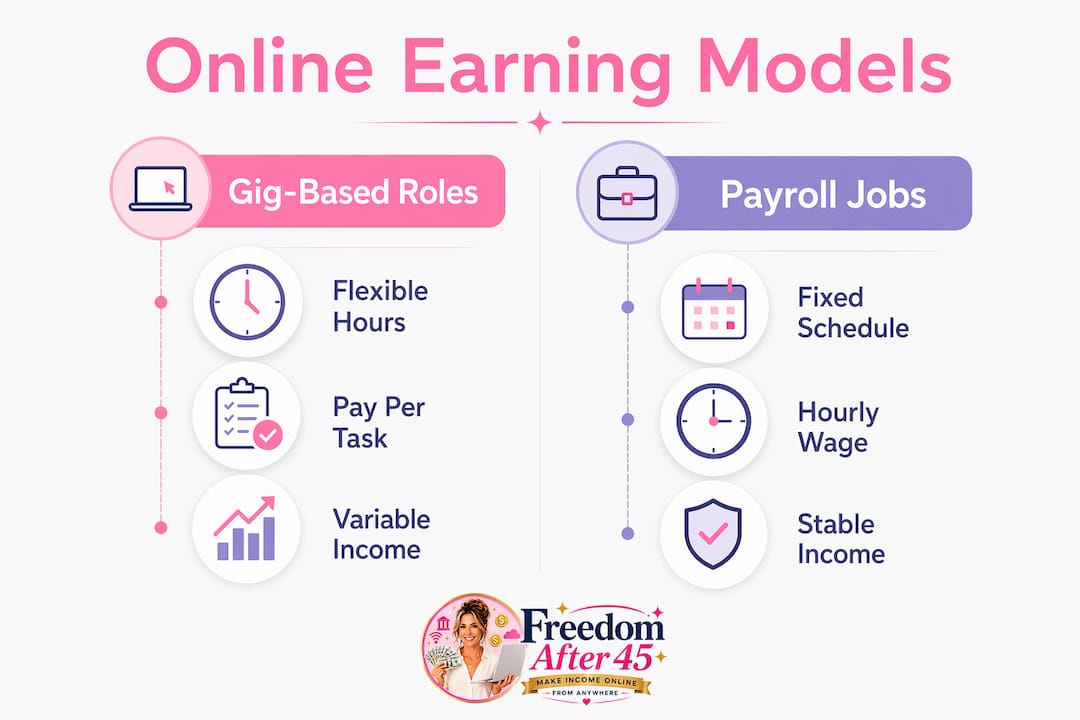
Students aiming for $100 daily income face a real choice between gig-based roles and traditional part-time payroll jobs. Both models work. Neither is universally better. The right answer depends on how predictable your weekly schedule is.
| Factor | Gig-based roles | Payroll part-time jobs |
|---|---|---|
| Schedule flexibility | High. Accept or decline work anytime. | Fixed shifts set by employer. |
| Income predictability | Variable. Earnings depend on task volume. | Stable. Set hourly rate each pay period. |
| Tax handling | Self-managed. Track income and set aside taxes. | Employer withholds taxes automatically. |
| Resume value | Builds entrepreneurial and self-management skills. | Builds traditional employment history. |
| Speed to first payment | Fast. Many platforms pay within 24 to 72 hours. | Slower. Biweekly payroll cycles are standard. |
Combining both models is the strategy most successful student earners use. A 10-hour-per-week payroll job at $15 per hour covers $150 in predictable weekly income. Gig work and tutoring sessions fill the remaining gap to reach $700 per week. This hybrid approach protects you from the income swings that pure gig work produces.
The tax consideration is real but manageable. Gig workers are responsible for tracking their own income and setting aside roughly 25 to 30 percent for self-employment taxes. A simple spreadsheet or a free tool like Wave handles this without an accountant. Payroll jobs handle withholding automatically, which removes that administrative burden entirely.
Students with highly variable class schedules, like those in nursing programs or engineering labs with shifting practicum hours, benefit most from gig flexibility. Students with stable Monday-through-Friday schedules often find that a payroll job plus weekend gig work is the most efficient combination.
Practical strategies that push daily income past $100 consistently
Reaching $100 once is a milestone. Reaching it consistently is a system. The students who do this reliably treat their online work like a small business, not a side hobby.
- Raise your rates every 90 days. High-earning tutors schedule efficiently, communicate professionally, and adjust rates regularly. A $2 per hour rate increase on six daily sessions adds $12 per day, which is $360 per month.
- Invest in one skill per semester. Content writers who learn basic SEO command higher rates. Video editors who learn Adobe Premiere Pro attract better clients. Skill investment compounds faster than extra hours.
- Use platform analytics. Most tutoring and freelance platforms show which days and times produce the most bookings. Shift your availability toward high-demand windows.
- Minimize downtime between tasks. Students without prior experience can start with data entry or content writing and grow from there, but growth requires filling idle time with productive work rather than waiting for opportunities to appear.
- Communicate like a professional. Responding to client messages within two hours, sending session reminders, and following up after completed work increases repeat bookings significantly.
Pro Tip: Automate your client communications using free tools like Calendly for scheduling and Gmail templates for follow-ups. Professionalism at scale is what separates students earning $50 per day from those earning $150.
The daily income for students who apply these strategies consistently sits well above the $100 mark within 60 to 90 days of starting. The compounding effect of better rates, stronger client relationships, and smarter scheduling is real and measurable.
Key takeaways
Students who treat online earning as a structured system rather than a casual side activity reach $100 daily within 60 to 90 days through tutoring, gig work, or a hybrid of both.
| Point | Details |
|---|---|
| Task-based pay is the fastest path | Pay-per-session roles like tutoring convert free time directly into same-day income. |
| Cancellations destroy daily targets | A 15% cancellation rate costs tutors hundreds monthly; automated reminders cut this by up to 50%. |
| Hybrid models outperform single-method approaches | Combining a payroll job with gig work smooths income variability and builds a stronger resume. |
| Rate increases compound quickly | A $2 per hour raise across six daily tutoring sessions adds $360 per month in extra income. |
| Skill investment raises your ceiling | Students who develop one marketable skill per semester consistently earn higher rates within 90 days. |
The honest truth about earning $100 daily as a student
At Freedom After 45, I have watched students overcomplicate this. They spend three weeks researching platforms, sign up for seven of them, and earn $12 in the first month. The students who hit $100 daily fast do the opposite. They pick one method, book it aggressively, and optimize from there.
The flexibility that online work offers is genuinely powerful for students. But flexibility without discipline produces the same result as no opportunity at all. I have seen students with 15 hours of free time per week earn less than students with 8 hours, simply because the latter group treated every session like it mattered.
The hybrid approach, pairing a stable payroll role with targeted gig or tutoring work, is the model I recommend most. It removes the anxiety of pure income variability while still giving you the upside of task-based pay. And it builds two lines on your resume instead of one.
One thing most articles will not tell you: the skill you build while earning matters as much as the income itself. A student who spends a year tutoring math, writing content, or editing video leaves college with a portfolio and a client list. That is worth more than the $36,500 in annual earnings the $100 daily target represents.
Protect your academic priorities first. No gig is worth a failed exam. But within that boundary, treat your earning hours with the same seriousness you bring to your coursework. That mindset is what separates students who dabble from students who actually build something.
— Freedom After 45
Ready to build a daily earning system that actually works?
If you are serious about reaching $100 daily online without burning out or sacrificing your grades, the structure you use matters as much as the method you choose. Freedom After 45 offers a 2-hour daily workflow designed to help you generate consistent online income with no existing audience, no product, and no prior experience required.

Thousands of people have already used this blueprint to move from financial stress to predictable daily earnings. The workflow is built for people with limited time, which makes it a natural fit for students balancing classes, assignments, and a real life. If you want a proven system rather than a list of platforms to figure out on your own, this is where to start.
FAQ
How many hours do students need to earn $100 daily online?
Most students reach $100 daily by working five to seven hours in tutoring or gig roles, based on pay rates of $13 to $18 per hour. Efficient scheduling and back-to-back session booking reduce the hours needed.
What online jobs for students pay the most per hour?
Tutoring, virtual assistance, and freelance content writing consistently pay the highest hourly rates for students, ranging from $13 to $25 per hour depending on skill level and platform.
Can students really earn online without prior experience?
Yes. Entry-level roles in data entry, transcription, and content writing require no credentials and allow beginners to start earning while building skills over time.
Is gig work or a payroll job better for hitting $100 daily?
A hybrid approach works best for most students. A part-time payroll job provides income stability while gig work or tutoring fills the gap to reach the $100 daily target with schedule flexibility.
How do students handle taxes on online gig income?
Gig workers are responsible for tracking their own income and setting aside approximately 25 to 30 percent for self-employment taxes. Free tools like Wave or a simple spreadsheet handle this without professional help.