

Online Income and Caregiver Finances: Your 2026 Guide
Online income for caregivers is defined as any earnings generated through digital platforms, remote work, or internet-based services that supplement traditional caregiving pay. The role of online income in caregiver finances is to provide flexible, supplementary earnings that protect financial stability when caregiving hours fluctuate or medical costs spike unexpectedly. 72% of Americans already use at least one secondary income stream, and caregivers are increasingly among them. With the U.S. average hourly rate for in-home caregivers sitting at $22.42, platforms like Care.com, Etsy, and YouTube have become real financial lifelines for people managing both caregiving duties and household budgets.
What are effective online income opportunities for caregivers?
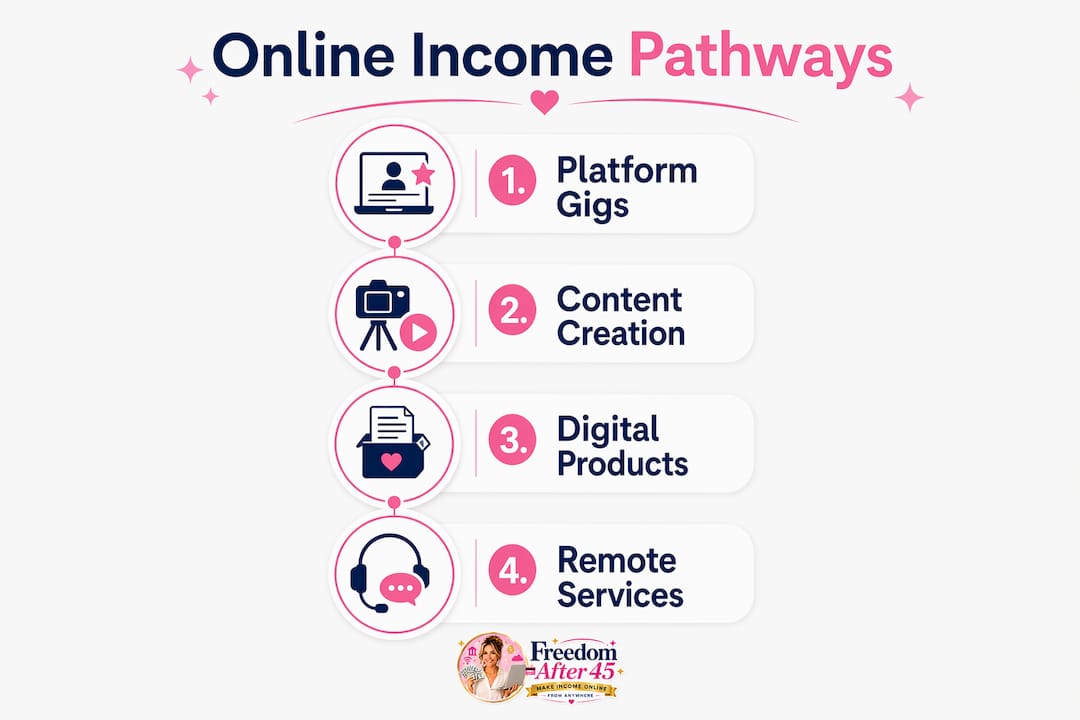
Caregiver online income falls into four practical categories: platform-based caregiving gigs, content creation, digital services, and product sales. Each fits a different skill set and schedule, so the right choice depends on how many hours you can realistically protect each week.
Platform-based caregiving gigs are the fastest entry point. Care.com connects caregivers with families seeking in-home support, and the earning potential is real. One part-time senior caregiver earned $4,200 in three months working 12 to 15 hours weekly, starting at $28 per hour and increasing to $32 to $35 after building a review profile. That trajectory shows what consistent, documented work produces over a short period.

Content creation sounds intimidating until you see who is doing it. An 81-year-old grandmother raised over $42,000 through YouTube monetization, using ads, Super Chat donations, and Super Thanks during livestreams. That story is not an outlier. It is proof that lived experience and authenticity convert into real audience loyalty on platforms that reward consistency over technical polish.
Digital services and product sales cover a wide range. Fiverr and Upwork host demand for scheduling support, document formatting, and virtual assistance, all skills caregivers already use daily. Etsy supports sales of digital downloads like care planning templates, daily routine checklists, and caregiver journals. These products take time to create once and generate income repeatedly without additional labor.
- Care.com and Sittercity for in-home caregiving gigs
- YouTube and Facebook Live for content monetization
- Etsy and Gumroad for digital product sales
- Fiverr and Upwork for remote administrative support
- Teachable and Kajabi for caregiver coaching or workshops
Pro Tip: Package deals like a flat rate of $120 for four hours or a weekly recurring rate reduce the back-and-forth of hourly billing and make your monthly income far easier to forecast.
How can caregivers manage and optimize their finances?
Financial management for caregivers who blend traditional caregiving pay with online earnings requires treating each income source as a separate line item. Mixing them together creates confusion at tax time and makes it nearly impossible to spot which income stream is actually growing.
Here is a practical system for managing multiple income sources:
- Open a dedicated checking account for online income. Keep caregiving pay and digital earnings in separate accounts from day one. This single step eliminates most bookkeeping confusion and makes quarterly tax estimates straightforward.
- Log every care hour immediately. In Medicaid-funded programs, incomplete documentation delays payments because fiscal intermediaries convert documented hours into paychecks. The same discipline applied to private pay clients protects you in any payment dispute.
- Use basic bookkeeping tools. Wave Accounting is free and handles invoicing, expense tracking, and basic reporting. QuickBooks Self-Employed costs around $15 per month and automates mileage and tax category sorting. Either option beats a spreadsheet for caregivers managing more than two income sources.
- Set clear rate structures before you start. Vague pricing invites scope creep and underearning. Decide your hourly rate, your package rate, and your minimum engagement before you post any profile or listing.
- Set aside 25 to 30 percent of online income for taxes. Online income from platforms like Fiverr or Etsy is self-employment income. The IRS requires quarterly estimated payments once you earn more than $400 from self-employment in a year.
Pro Tip: Women over 55 who juggle caregiving and income roles are underrepresented in economic empowerment programs. Seek out niche platforms that value lived experience and organizational skill rather than technical credentials.
Budgeting for caregiver finances works best when you treat online income as a separate budget category with its own savings goal. Assign a fixed percentage to an emergency fund, a fixed percentage to taxes, and let the remainder flow into household expenses or debt reduction. This structure prevents the common mistake of spending variable income as if it were guaranteed.
What challenges do caregivers face when earning online?
Every caregiver income strategy runs into real friction. Knowing the obstacles in advance means you can plan around them rather than quit when they appear.
- Digital literacy gaps. Many caregivers, particularly those over 55, face a genuine technology learning curve. The solution is intergenerational co-creation, where a younger family member handles platform setup, video editing, or listing creation while the caregiver provides the content and expertise. This division of labor removes the biggest barrier without requiring the caregiver to become a tech expert overnight.
- Income irregularity. Online income is variable by nature. A month with three Care.com bookings looks very different from a month with one. Building a three-month cash reserve before relying on online earnings for fixed expenses protects you from that volatility.
- Time constraints and burnout risk. Caregiving is already physically and emotionally demanding. Adding an income project without clear time boundaries creates a recipe for exhaustion. Avoiding an all-or-nothing mindset and setting defined working hours for online income protects both caregiving quality and personal health.
- Legal and contractual gaps. Private pay caregiving arrangements without written agreements expose both parties to disputes over hours, rates, and scope. A simple one-page service agreement signed before work begins eliminates most of these problems.
- Platform dependency. Relying on a single platform for all online income is a fragile strategy. Algorithm changes, policy updates, or account suspensions can eliminate income overnight. Diversifying across two or three platforms from the start creates a more stable base.
How do caregivers balance caregiving with online income work?
Balance is not a feeling. It is a schedule. Caregivers who succeed with online income treat their digital work hours the same way they treat caregiving shifts: with fixed start times, fixed end times, and no negotiation.
- Map your actual weekly schedule first. Write down every caregiving commitment, appointment, and personal obligation before adding any online work. The gaps you find are your real working hours, not the optimistic ones you imagine.
- Choose one income lane and stay in it for 90 days. Trying to run a YouTube channel, an Etsy shop, and a Care.com profile simultaneously fragments your attention and produces mediocre results across all three. Pick the option that fits your existing skills most naturally and commit to it for a full quarter before evaluating.
- Pilot small before scaling. Start with one Fiverr gig, one digital product, or two Care.com bookings per week. Scaling a system that works is far easier than fixing a system that collapsed under too much volume too fast.
- Build simple payment and agreement systems early. Use tools like PayPal, Venmo for Business, or Wave invoicing from your first transaction. Chasing informal payments is a time drain that erodes the financial benefit of the work.
- Use calendar blocking and reminder apps. Google Calendar with color-coded blocks for caregiving, online work, and personal time gives you a visual reality check every morning. When the blocks are full, the answer to new requests is no.
Caregiver side work succeeds best when it is clearly defined and bounded. That boundary is not a limitation. It is the structure that makes the income sustainable over months and years rather than weeks.
Key takeaways
Online income strengthens caregiver finances most when it is structured, documented, and bounded by clear time limits that protect caregiving quality.
| Point | Details |
|---|---|
| Start with platform gigs | Care.com and Sittercity offer the fastest path to verified, paying clients for caregivers. |
| Separate your income streams | Keep online earnings in a dedicated account to simplify tax tracking and financial forecasting. |
| Document every hour worked | Meticulous care logs protect Medicaid payments and private pay agreements from disputes. |
| Use intergenerational support | Partner with a younger family member for technical tasks to remove the digital literacy barrier. |
| Set a 90-day single focus | Commit to one income channel before expanding to avoid burnout and scattered results. |
What I’ve learned about caregivers and online income
At Freedom After 45, we have worked with thousands of caregivers who came to us financially stretched and skeptical that anything digital could fit their lives. The pattern we see most often is not failure from lack of effort. It is failure from starting too broadly and expecting too much too fast.
The caregivers who build lasting online income share one trait: they treat their first 90 days as a learning investment, not a revenue target. A grandmother who spends her first month setting up a proper Wave account, writing two Etsy listings, and booking one Care.com client is not behind. She is building infrastructure that compounds.
The other thing conventional advice gets wrong is the assumption that caregivers need to become content creators or tech entrepreneurs. Most do not. The highest-return opportunities for caregivers are extensions of what they already do: organizing, supporting, documenting, and advising. Packaging those skills into a Fiverr service or a digital checklist on Etsy requires far less reinvention than a YouTube channel.
The financial empowerment piece matters beyond the money itself. Caregivers who generate even $300 to $500 per month in supplemental online income report lower financial anxiety and greater confidence in their caregiving decisions. That psychological shift is the real return on the investment of time.
— Freedom After 45
A proven workflow built for caregiver schedules
Freedom After 45 was built specifically for people who cannot afford to waste time on income strategies that require months of setup before a single dollar arrives.

The 2-Hour Workflow at the core of the Freedom After 45 program is designed around the exact constraints caregivers face: limited hours, limited technical background, and zero tolerance for complexity that does not pay off. The blueprint walks you through generating daily online income of $100 to $1,400 with no existing social media following and no product to sell. Thousands of families have already used it to move from financial overwhelm to a structured, predictable income model. If you are ready to stop guessing and start building, this is where to begin.
FAQ
What is the role of online income in caregiver finances?
Online income fills the gap between fixed caregiving pay and actual household expenses by adding a flexible, scalable earnings layer. It gives caregivers financial independence that does not depend on a single employer or program.
How much can caregivers realistically earn online?
Earnings vary widely by platform and hours invested. One documented example shows a part-time caregiver earning $4,200 in three months working 12 to 15 hours per week on Care.com.
What online jobs are best suited for caregivers?
Platform caregiving gigs on Care.com, digital product sales on Etsy, and remote administrative work on Fiverr are the most accessible options because they require skills caregivers already use daily.
How do caregivers handle taxes on online income?
Online income from self-employment platforms is taxable. Set aside 25 to 30 percent of earnings and use a tool like QuickBooks Self-Employed or Wave to track income by category for quarterly IRS estimated payments.
How can older caregivers overcome technology barriers?
Intergenerational co-creation pairs older caregivers with younger family members who handle technical setup, allowing the caregiver to focus on content and expertise rather than platform mechanics.