

Online Earning Around Your Class Schedule in 2026
Online earning around your class schedule means selecting flexible income opportunities that let you control when and how much you work so your education stays the priority. Students in 2026 have more options than any previous generation, from tutoring platforms like Preply and Tutor.com to microtask sites like Amazon Mechanical Turk and gig apps like DoorDash. The key is matching the right opportunity to your actual available time blocks, not just picking whatever pays the most. This guide covers the best flexible online jobs, the tools you need, and the scheduling strategies that make part-time online earning sustainable without burning out.
What flexible online earning opportunities fit best around class schedules?
The best side income while studying comes from roles that let you start and stop on your own terms, not roles that demand fixed 40-hour commitments. Three categories dominate the student-friendly earning space: tutoring, microtasks, and gig economy work. Each fits differently depending on how much free time you have between classes and what skills you bring.
Online tutoring is the highest-paying option for most students. Tutoring platforms like Preply list rates and qualification requirements openly, with experienced tutors earning up to $40 per hour by setting their own session availability. That earning potential is significant because it means two focused hours of tutoring can cover a full day’s grocery budget. The tradeoff is that you need demonstrable subject proficiency, and building a steady client base takes time upfront.

Microtasks are the opposite end of the spectrum. Platforms like Amazon Mechanical Turk and Clickworker offer surveys, data labeling, and categorization tasks that take five to twenty minutes each. Microtask work suits short windows between classes perfectly because there is no scheduling commitment and no special skill requirement. Pay rates vary widely, often falling below $10 per hour for basic tasks, but the zero-barrier entry makes them a reliable fallback when your schedule is unpredictable.
Gig apps like DoorDash, Uber Eats, and TaskRabbit sit in the middle. They pay more than microtasks and require less qualification than tutoring, but they do require transportation and physical availability. These work best for students with afternoon gaps rather than scattered 30-minute breaks.
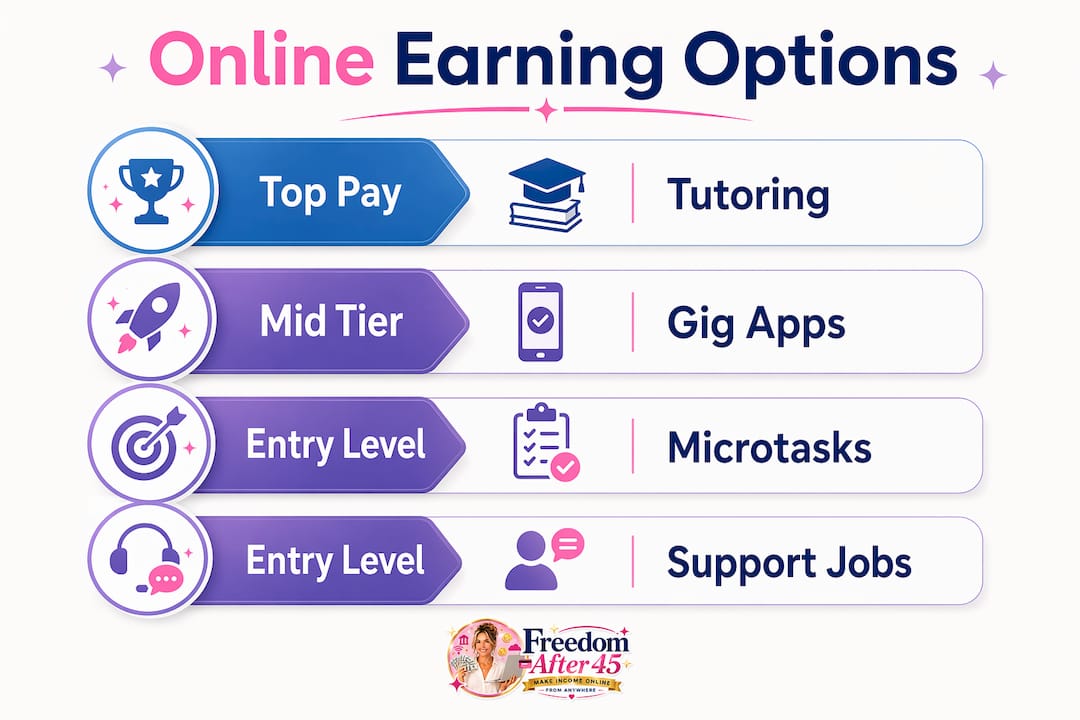
Remote customer service rounds out the options. Chat-based customer service roles pay $25 to $35 per hour with shift flexibility, making them one of the better-paying work from home schedule options for students willing to commit to night hours.
| Job type | Hourly range | Time commitment | Skill required |
|---|---|---|---|
| Online tutoring | $27 to $40+ | Session-based, self-set | Subject proficiency |
| Microtasks | $5 to $12 | Any free window | Minimal |
| Gig delivery apps | $15 to $25 | Flexible shifts | Transportation |
| Remote chat support | $25 to $35 | Minimum weekly hours | Communication skills |
Pro Tip: Start with microtasks during your first week to earn immediately while you build your tutoring profile or gig app rating. The two income streams complement each other perfectly during the ramp-up phase.
How can you organize your time to maximize online earning?
Time mapping is the single most effective scheduling move a student can make before starting any online work. Pull up your class timetable and mark every block of 45 minutes or more that falls outside class, commuting, and mandatory study time. Those gaps are your earning windows, and treating them as fixed appointments changes how productively you use them.
Here is a practical five-step approach to organizing your schedule for consistent part-time online earning:
- Map your week in 30-minute blocks. Use Google Calendar or Notion to color-code classes, study time, and potential work windows. Seeing the week visually reveals patterns you miss when planning in your head.
- Assign job types to block sizes. Reserve blocks under 45 minutes for microtasks on Amazon Mechanical Turk or Clickworker. Reserve 60-to-90-minute blocks for tutoring sessions or customer service shifts.
- Set client-facing availability windows. On Preply or Tutor.com, only mark yourself available during blocks you can reliably protect. Flexibility is limited by platform hours, so plan within those windows rather than assuming you can work anytime.
- Build a buffer before exams. Mark exam weeks as unavailable at least two weeks in advance. Clients and platforms respond better to advance notice than to last-minute cancellations.
- Review and adjust weekly. Spend ten minutes every Sunday comparing what you planned to what you actually worked. Adjust the next week’s availability based on what you learned.
Combining multiple income streams within a single week is smart, but only if each stream fits a different block type. Trying to squeeze a tutoring session into a 30-minute gap creates stress and poor session quality. Matching the job to the time block is what makes the system work.
Pro Tip: Use the Toggl Track app to log actual hours worked per income stream. After two weeks, you will know exactly which gig pays the most per hour of real time invested, including setup and travel.
What tools and platforms do you need to start earning online?
Getting started with flexible online jobs requires less setup than most students expect. The core tools are a stable internet connection, a laptop or smartphone, and accounts on two or three platforms that match your available time.
For tutoring, the three most established platforms are Preply, Tutor.com, and Varsity Tutors. Preply tutoring jobs require a profile with subject expertise and a short video introduction. Tutor.com and Varsity Tutors both run background checks and subject assessments, which adds a few days to onboarding but signals credibility to clients. Rates on these platforms are competitive, and the built-in student matching removes the need to market yourself independently.
For microtasks, Amazon Mechanical Turk remains the largest platform by task volume. Clickworker and Appen offer slightly higher-paying tasks focused on AI training data and language work, which suits students with strong writing or language skills. All three platforms pay via direct deposit or PayPal, with no minimum payout threshold on most tasks.
For gig delivery, DoorDash and Uber Eats both offer instant scheduling through their apps, meaning you can go online for exactly the hours you choose. TaskRabbit works differently: you list your skills and hourly rate, then accept or decline job requests. TaskRabbit suits students with practical skills like furniture assembly, moving help, or basic tech support.
For remote customer service, search specifically for non-phone, chat-based roles on job boards like Indeed or Remote.co. These roles avoid the noise and scheduling rigidity of phone support, making them far more compatible with a shared living situation or a library study room.
The basic tech stack you need across all of these: a laptop with a webcam for tutoring, a reliable mobile data plan as backup internet, a free scheduling app like Calendly for client-facing availability, and a simple spreadsheet to track income and hours for tax purposes.
What challenges do students face with online earning and how do you fix them?
Earning online around classes is achievable, but four specific problems trip up most students within the first month.
Inconsistent income volume is the most common frustration. Independent contractor tutors must actively maintain sessions and build repeat students to ensure steady income because scheduling freedom does not automatically generate demand. The fix is to accept every reasonable session request during your first four weeks, even if the timing is slightly inconvenient. Early reviews and repeat bookings are the foundation of a stable tutoring income.
Minimum hour requirements catch students off guard in customer service roles. Chat-based remote roles require minimum weekly participation for pay increases, meaning students who work sporadically may never qualify for the higher pay tiers. Read the commitment terms before accepting any role and only sign up if you can realistically meet the minimum during a typical academic week, not just during breaks.
Burnout from overcommitting is real and underestimated. Students who stack tutoring, microtasks, and gig delivery simultaneously often see their grades drop within six weeks. The solution is a hard cap: set a maximum weekly earning hours limit before you start, and treat it as non-negotiable.
Tax and payment tracking surprises most first-time online earners. In the United States, any self-employment income over $400 in a year requires a Schedule SE filing. Keep a simple log of every payment received, the platform it came from, and the date. Apps like Wave or QuickBooks Self-Employed automate most of this tracking for free or low cost.
“The students who succeed at online earning are not the ones who work the most hours. They are the ones who protect their study time first and treat their earning windows as a business, not a hobby.”
Key takeaways
Sustainable online earning around your class schedule requires matching job types to your specific time blocks, not just signing up for every available platform.
| Point | Details |
|---|---|
| Match job to block size | Use microtasks for short gaps and tutoring or chat support for 60-plus-minute windows. |
| Tutoring pays the most | Platforms like Preply offer up to $40 per hour for qualified tutors with self-set schedules. |
| Platform hours limit flexibility | Most platforms operate within set windows, so plan your availability accordingly. |
| Minimum commitments matter | Chat support roles require minimum weekly hours to unlock higher pay tiers. |
| Track income from day one | Log every payment for tax purposes and use apps like Wave to automate the process. |
What I have learned from balancing earning and studying
At Freedom After 45, we have worked with thousands of people who started their online earning journey while managing packed schedules, and the pattern we see most often is not laziness or lack of effort. It is misalignment. People pick the highest-paying option without checking whether it actually fits their life, then quit within three weeks because the friction is too high.
The students and adult learners who build real, consistent side income while studying share one habit: they treat their earning time like a class they cannot skip. They do not wait to feel motivated. They open the platform, complete the work, and close it. That discipline, applied to even two focused hours per day, compounds faster than most people expect.
My honest caution is this: do not chase the $40-per-hour tutoring rate before you have built the client base to support it. Start with microtasks or a single gig app to create immediate cash flow and reduce financial pressure. Then layer in tutoring as your profile and reviews grow. Scaling gradually protects your grades and your sanity.
The two-hour window is not a marketing phrase. It is a real constraint that works in your favor. Two focused hours of the right work, done consistently, outperforms six scattered hours of the wrong work every single time.
— Freedom After 45
Ready to turn your free hours into real daily income?
If you are serious about building flexible income that fits your schedule without sacrificing your education or your peace of mind, Freedom After 45 has built the exact framework for that.

The 2-Hour Workflow at earningdaily.net is a step-by-step blueprint designed for people with limited daily availability who want to generate $100 to $1,400 per day without needing a social media following, an existing product, or prior experience. Thousands of families have already used it to move from financial stress to financial stability. If you have two hours and a willingness to follow a proven system, this is the most direct path from where you are to where you want to be.
FAQ
What is the best online job for students between classes?
Online tutoring on platforms like Preply or Tutor.com offers the highest hourly pay for students, with rates reaching $40 per hour for qualified tutors. Microtasks on Amazon Mechanical Turk are the best option for shorter gaps under 45 minutes.
How many hours per week can I realistically earn online around classes?
Most students can sustainably manage 8 to 15 hours per week of online work without impacting academic performance. The key is mapping your actual free blocks before committing to any platform’s minimum hour requirements.
Do I need special skills to start earning online as a student?
Microtask platforms require no special skills and are the fastest way to start earning immediately. Tutoring and remote customer service roles require subject knowledge or communication skills, but both are accessible to most college students.
How do platform hours affect my flexibility?
Platform operational hours limit when you can actually work, even on platforms marketed as fully flexible. Tutoring platforms and customer service roles typically operate within set daily windows, so you must plan your availability within those times rather than assuming 24/7 access.
Do I have to pay taxes on online earnings as a student?
Yes. In the United States, self-employment income over $400 per year requires a Schedule SE tax filing regardless of student status. Tracking every payment from day one using a free tool like Wave prevents a stressful surprise at tax time.