

Benefits of Earning Online During School in 2026
Earning online during school is the most practical way for students to build income, skills, and financial independence without sacrificing academic performance. The benefits of earning online during school go far beyond a paycheck. They include schedule control, career-ready skills, and the ability to work from anywhere, advantages that traditional part-time jobs rarely offer. Platforms like Upwork, Fiverr, Chegg Tutors, and Amazon Mechanical Turk have made it possible for students to earn real money between classes, during study breaks, or late at night. Programs like Federal Work-Study exist, but online earning often provides more flexibility and higher hourly returns for the time invested.
1. Benefits of earning online during school start with schedule flexibility
Schedule flexibility is the single biggest advantage online work holds over traditional employment for students. A campus job or retail shift locks you into fixed hours that may conflict with exams, lab sessions, or group projects. Online work, by contrast, is largely asynchronous. You complete tasks when it suits you, not when a manager needs coverage.
Asynchronous online work lets students fit earning around their heaviest academic weeks rather than the other way around. During finals, you scale back. During a lighter semester, you take on more projects. That kind of control is impossible in most brick-and-mortar jobs.
- Freelance writing, graphic design, and data entry on platforms like Upwork or Fiverr have no set shift times
- Online tutoring through Chegg Tutors or Wyzant lets you set your own availability calendar
- Microtask platforms like Amazon Mechanical Turk pay per task completed, so you work five minutes or five hours depending on your day
Pro Tip: Block your online work hours in Google Calendar the same way you block class time. Students who treat work slots as fixed appointments consistently earn more without letting it bleed into study time.
2. Online work builds career skills faster than most campus jobs
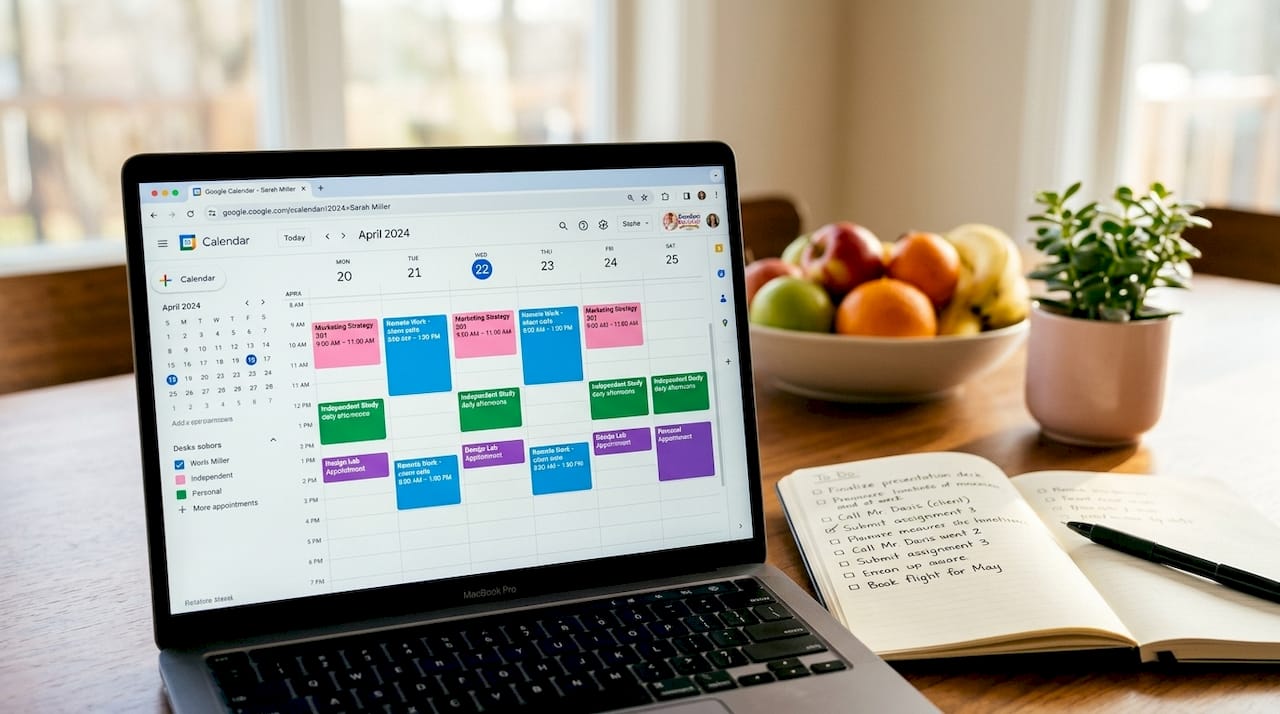
Remote work for students builds digital communication, self-management, and professional skills that employers actively seek. A campus dining hall job teaches reliability. An online freelance project teaches client communication, deadline management, and deliverable quality, skills that translate directly to post-graduation employment.
The fields most accessible to students online are also the fields growing fastest. Digital marketing, content writing, web development, and online tutoring are all areas where a student can build a portfolio while still enrolled. That portfolio becomes a competitive advantage when applying for internships or full-time roles.
- Freelance writing builds SEO knowledge, research skills, and editorial judgment
- Coding projects on platforms like Toptal or GitHub demonstrate technical ability to future employers
- Online tutoring sharpens subject-matter expertise and communication under pressure
- Social media management for small businesses teaches marketing analytics and content strategy
Networking is an underrated benefit here. Clients on Upwork or LinkedIn often refer good student freelancers to colleagues, creating a professional network before graduation that most students spend years building afterward.
3. Financial benefits of earning online are direct and immediate
FWS wages are paid directly to students twice a month for hours worked, not credited toward tuition. Online earning works the same way. You earn money you can actually use for rent, textbooks, groceries, or savings. That directness matters when you are managing a real budget.
The financial advantage over traditional student aid is significant. Financial aid packages often arrive in lump sums tied to enrollment status and come with restrictions. Online earnings arrive continuously, scale with your effort, and carry no enrollment conditions. Students who earn $300 to $800 per month online can meaningfully reduce their reliance on student loans.
Pro Tip: Open a separate checking account exclusively for online earnings. Keeping work income separate from financial aid makes budgeting cleaner and simplifies tax filing at year end.
Students earning above certain thresholds must file income tax returns, with rules varying by income type and dependency status. This is not a reason to avoid earning. It is a reason to track income carefully from the start. Apps like QuickBooks Self-Employed or Wave make this straightforward even for first-time filers.
4. Online earning teaches financial literacy in real time
Managing your own income as a student is a practical education that no classroom delivers. You learn to invoice clients, track expenses, set rates, and plan for taxes. These are skills that most adults learn painfully in their late twenties. Students who earn online during school arrive at graduation already fluent in personal finance.
Students must carefully categorize income for tax purposes, distinguishing scholarships from earned wages to avoid filing errors. Learning this distinction early prevents costly mistakes and builds the kind of financial awareness that compounds over a lifetime. A student who understands the difference between a 1099 and a W-2 at age 20 is ahead of most adults.
Budgeting becomes concrete when the money is yours. Earning $400 in a month and deciding how to allocate it between savings, tuition, and personal expenses is a more effective financial education than any personal finance course.
5. Online jobs reduce financial pressure without requiring loans
Student loan debt in the United States has reached a scale where any income that reduces borrowing has compounding long-term value. Every dollar earned online during school is a dollar not borrowed at interest. A student earning $500 per month for three academic years avoids roughly $18,000 in potential loan principal, before interest.
Online courses often cost less than in-person alternatives, and the same logic applies to online earning. The overhead is near zero. You need a laptop and an internet connection. There are no commuting costs, no work uniforms, and no transportation time eating into your study schedule.
Federal Work-Study eligibility requires completing FAFSA, enrolling at least half-time, and meeting academic progress standards, with eligibility reassessed every year. Online freelance work has none of those barriers. Any student with a marketable skill can start earning within days of creating a profile on Fiverr or Upwork.
6. Location independence means you can earn from anywhere
A traditional part-time job ties you to a physical location. Online work follows you. Whether you are studying abroad for a semester, home for winter break, or commuting between campuses, your income does not pause. That continuity is genuinely valuable for students whose lives are geographically unpredictable.
This location independence also opens access to clients and employers far beyond your local area. A student in rural Ohio can write content for a tech startup in San Francisco or tutor a student in London. The geographic reach of online work multiplies both earning potential and professional exposure.
7. Part-time online jobs for students build independence and confidence
There is a psychological benefit to earning your own money that financial aid cannot replicate. Students who earn online report greater confidence in professional settings, stronger negotiation skills, and a clearer sense of their own market value. These are not soft benefits. They translate into better salary negotiations and career decisions after graduation.
Work-study job hours are typically capped at 20 per week to keep academic focus intact. Online freelance work can be self-regulated to the same standard. The discipline required to limit work hours and protect study time is itself a skill that employers value and that most young adults develop only through trial and error.
8. How earning online compares to traditional student jobs
| Job type | Schedule control | Skill development | Earning potential | Startup cost |
|---|---|---|---|---|
| Online freelancing (Upwork, Fiverr) | High | High | $15 to $75 per hour | None |
| Online tutoring (Chegg, Wyzant) | High | Moderate to high | $15 to $40 per hour | None |
| Microtasks (Amazon Mechanical Turk) | Very high | Low | $8 to $15 per hour | None |
| Campus job (dining, library) | Low | Low to moderate | $10 to $15 per hour | None |
| Retail or food service | Low | Low | $12 to $18 per hour | None |
The table makes the case clearly. Online options offer comparable or superior pay with significantly more schedule control. The one trade-off is that online work requires self-motivation. There is no manager scheduling your shifts, which means the discipline to show up consistently is entirely yours.
Dog walking earns $15 to $25 per walk with monthly income potential of $400 to $800, fitting around school hours. It is worth noting as a hybrid option for students who want offline flexibility alongside online income streams.
Key takeaways
Earning online during school works because it combines schedule flexibility, real skill development, and direct income with no enrollment barriers or geographic restrictions.
| Point | Details |
|---|---|
| Flexibility beats traditional jobs | Online work scales up or down around exams, assignments, and breaks without losing income. |
| Skills compound over time | Freelancing and tutoring build portfolios and professional networks before graduation. |
| Direct income reduces loan reliance | Every dollar earned online is a dollar not borrowed at interest over a multi-year repayment period. |
| Tax awareness starts early | Tracking income and understanding 1099 versus W-2 forms prevents costly errors and builds financial literacy. |
| Low barriers to entry | Platforms like Upwork and Fiverr require only a skill and a profile, no FAFSA, no interview, no commute. |
What I have learned about earning online as a student
Freedom After 45 has worked with thousands of people who started their online earning journey while juggling other major commitments, and students are among the most capable earners in that group. The conventional advice is to “find balance.” That framing is wrong. Balance implies equal weight. What actually works is sequencing: academics first, earning second, and a clear rule about when one stops and the other starts.
The students who struggle are not the ones who work too much. They are the ones who treat online earning as a passive activity that will somehow fit itself around their schedule. It does not. You have to schedule it deliberately, the same way you schedule a study session.
The other thing most articles will not tell you: the skills you build earning online during school are often more valuable than the money itself. A student who has managed five freelance clients, filed a 1099, and built a Upwork profile with reviews has a professional story that most graduates cannot tell. That story opens doors.
Start small. One platform, one skill, ten hours per week. The 2-hour daily workflow model proves that consistent, focused effort beats sporadic high-volume work every time. Protect your GPA. Protect your sleep. But do not wait until graduation to start building.
— Freedom After 45
Start earning online without sacrificing your grades
Students who want a structured path to online income do not need to figure it out alone. Freedom After 45 built the 2-Hour Workflow specifically for people who have limited time and need a system that produces real results without consuming their entire day.

The workflow requires no existing audience, no product, and no prior experience. It is designed to generate $100 to $1,400 in daily profit from just two hours of focused work. For students managing a full course load, that kind of efficiency is the difference between a side income that works and one that burns you out. Visit earningdaily.net to see exactly how the system works and whether it fits your schedule.
FAQ
What are the main benefits of earning online during school?
The main benefits include flexible scheduling that fits around classes and exams, skill development in high-demand fields, and direct income that reduces dependence on student loans. Online platforms like Upwork and Fiverr require no commute and no fixed shift times.
How many hours per week should students work online?
Most financial aid programs cap work-study at 20 hours per week to protect academic performance. For online freelance work, 10 to 15 hours per week is a practical starting point that generates meaningful income without compromising grades.
Do students have to pay taxes on online earnings?
Yes. Students earning above standard deduction thresholds must file income tax returns, with rules varying by income type and dependency status. Freelance income is typically reported on a 1099 form and is subject to self-employment tax.
What online jobs are best for students with no experience?
Microtask platforms like Amazon Mechanical Turk, content writing on Textbroker, and online tutoring through Chegg Tutors are accessible entry points that require no prior professional experience, only a demonstrable skill or subject knowledge.
Does online earning affect financial aid eligibility?
Earned income can affect need-based aid calculations when reported on FAFSA. Federal Work-Study eligibility is reassessed annually, and independent online earnings may shift your expected family contribution in subsequent years. Consult your financial aid office before significantly increasing your income.