

2 Hour Workflow to Passive Income Without Social Media for Women 45+
Five paths deliver passive income without social media: selling on established marketplaces, building search-driven digital products, earning investment distributions, renting out physical space, and running search-optimized affiliate content. Each one works, but none of them run themselves. They all demand real setup work upfront and occasional maintenance after that, which is a very different promise than the “post nothing, earn forever” pitch you’ll see elsewhere. The rest of this guide breaks down exactly how to start each one.
TL;DR:Selling on established marketplaces like Etsy or eBay relies on active search traffic, requires upfront validation, and involves platform fees and fulfillment logistics.Digital products can generate passive income through search optimization and automated delivery, but demand maintenance and occasional updates.Search-driven affiliate content typically takes months to rank well and benefits from building an owned email list to maintain control over customer engagement.Investment income from dividends, REITs, ETFs, and CDs depends on capital invested, with returns scaling with the amount, and involves risk and tax considerations.Offline passive options like renting space or running vending machines require capital, local permits, and some ongoing management but can operate entirely outside social media channels.
Freedom After 45Build Your Two Hour WorkflowFreedom After 45 offers a step-by-step blueprint for women over 45 seeking recurring income without relying on a social media following.Explore the 2-Hour Workflow
Table of Contents
- How Do You Make Money Without Social Media Using Marketplaces?
- Can You Sell Digital Products Without Social Media Promotion?
- How Does Search Traffic Replace Social Media for Affiliate Income?
- Do Dividends and REITs Really Pay Passive Income?
- What Offline Passive Income Options Skip Social Media Entirely?
- How Do You Report Taxes on Passive and Side Income?
- Why a Structured Workflow Beats a Scattered Approach
- When Should You Add Social Media, If Ever?
- Ready to Start? What the 2-Hour Workflow Offers
- Sources
- FAQ
How Do You Make Money Without Social Media Using Marketplaces?
Marketplace-first selling means letting buyers find you through search inside Amazon, Etsy, or eBay instead of chasing them through a feed. These platforms already have the traffic. Someone typing “leather passport holder” into Etsy’s search bar is closer to a purchase than someone scrolling past your post on Instagram, because they showed up with money and intent already in hand. That single fact is why marketplace buyers convert at a different rate than social audiences — they’re not being interrupted, they’re actively looking.
Validation comes before production, not after. Search your product idea on the marketplace you’re targeting and study the top 20 results: their review language, their price points, their photo quality, and how many reviews it took before they started ranking. If a category is saturated with 10,000+ reviews on every top listing, that’s a signal to niche down, not to give up. A cheap way to test demand is listing a minimum viable version, sometimes with a small batch of inventory or a single print-on-demand design, before you invest in a full product line.
Once you’ve validated, the listing itself does most of the selling:
- Keywords in the title and backend fields matching how buyers actually search, not how you’d describe the product to a friend.
- Photos that show scale, use, and detail — listings with lifestyle shots consistently outperform plain white-background shots alone.
- Descriptions that answer objections before a buyer has to ask (sizing, materials, care instructions, shipping time).
- Pricing that accounts for platform fees, which run roughly 6.5% on Etsy transactions plus payment processing, and vary by category on Amazon and eBay.
- Shipping settings that reduce your own labor, like calculated shipping or flat-rate boxes you don’t have to weigh every time.
Fulfillment is where “passive” gets tested. Amazon FBA lets Amazon handle storage, packing, and shipping in exchange for fees, which turns a physical-product business into something closer to inventory management. Print-on-demand services (Printful, Printify, and similar) eliminate inventory entirely: you upload a design, a customer orders, and a third party prints and ships it. Digital marketplace listings, like templates or clip art sold on Etsy, deliver instantly with zero fulfillment labor at all.
Pro Tip: Before you build a full product catalog, list one item and watch what happens for two to three weeks. A listing with zero views tells you something different than a listing with 200 views and no sales, and you need to know which problem you actually have.
Startup costs range from under $50 for a print-on-demand storefront to several hundred dollars for initial inventory in a physical product line. Time to first sale typically runs anywhere from a few days (digital downloads) to six to eight weeks (physical products needing to build review history and search ranking). This path fits people who like tangible products, don’t mind occasional customer service, and want a business model search engines already understand.
Can You Sell Digital Products Without Social Media Promotion?
Yes, and it’s one of the more durable no-social options because the product, once built, doesn’t need to be rebuilt for every sale. Courses, ebooks, templates, and printables all follow the same basic shape: you build it once, buyers discover it through search or marketplaces, and delivery happens automatically.
The first real decision is where to sell it:
- Marketplace-hosted (Etsy, Amazon KDP, Creative Market): built-in search traffic, but you’re competing inside their algorithm and paying their fees, and you don’t own the customer relationship.
- Own checkout (Gumroad, Payhip, a simple website): you keep more of the revenue and the customer’s email address, but you’re responsible for driving your own traffic through search or content.
- Hybrid: list on a marketplace to validate and generate initial reviews, then build an owned checkout once you have proof the product sells.
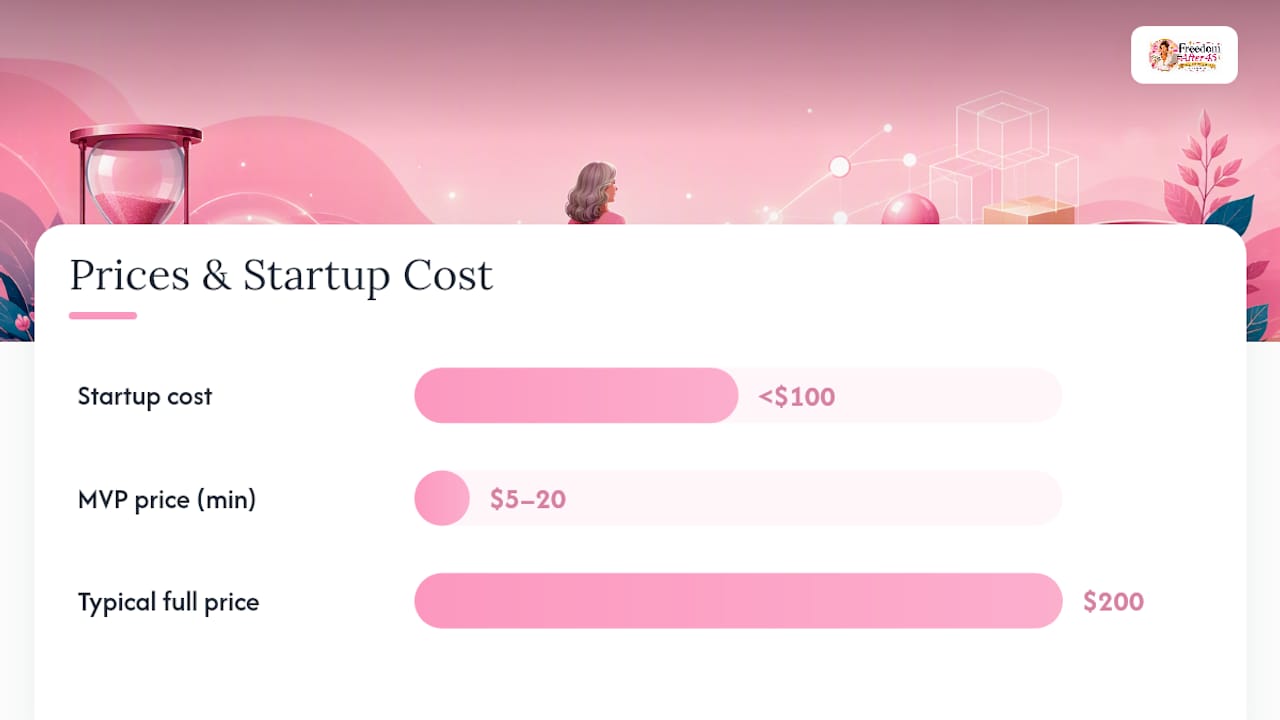
Validation works the same way here as with physical products: check keyword search volume for your topic, look at what’s already ranking or selling well, and consider a small paid pre-sale or a $5 to $20 minimum viable version before committing weeks to a full course. If ten people won’t pay a few dollars for the stripped-down version, a $200 version won’t fix that problem.
Your technical stack matters more here than in physical retail, because “digital” only stays “passive” if delivery is automated. A workable setup looks like this:
- Checkout and delivery: Gumroad or Payhip both handle payment processing and automatically email the file or course access the moment someone buys, with no manual step from you.
- Email onboarding sequence: a short automated series (welcome, how to use it, where to get help) that reduces one-off support emails.
- Update tracking: a simple document logging when you last revised the product, since outdated templates or courses generate refund requests and bad reviews.
This is where “passive” needs an honest asterisk. Maintenance tasks don’t disappear. You’ll field refund requests, answer support questions when something doesn’t download correctly, update content when the software or platform it references changes, and keep an eye on marketplace policy shifts that can affect how your listing is categorized or fee’d. One approach frames this whole model as quiet commerce: search, marketplaces, and email working together as an alternative to social-led selling that compounds instead of resetting every time an algorithm changes.
Expect two to six weeks to build and launch a first digital product, depending on complexity, and startup costs under $100 if you’re using existing skills and free or low-cost tools. This path suits people who already have knowledge worth packaging, whether that’s a skill from a past career, a craft, or a process they’ve refined for themselves, and who’d rather write once than restock inventory weekly.
How Does Search Traffic Replace Social Media for Affiliate Income?
Someone searching “best budget espresso machine under $200” has already decided to buy something in that category. They just need to decide which one. That’s a fundamentally different mindset than someone scrolling a feed who wasn’t shopping for anything, and it’s why buyer-intent search traffic tends to convert into affiliate commissions at a meaningfully higher rate than social traffic, dollar for dollar of effort spent.
Building pages that capture that traffic follows a fairly mechanical checklist:
- Target phrases with buying intent: “best,” “vs,” “review,” and “for [specific use case]” outperform vague topic pages.
- Product-led content structure: comparison tables, pros and cons, and clear recommendations rank and convert better than long personal narratives.
- Internal linking between related pages: a “best X” page linking to individual product review pages keeps visitors on your site longer and spreads authority around.
- Schema markup: structured data (review schema, FAQ schema) helps search engines display your content with star ratings or expandable answers, which increases click-through even at the same ranking position.
Monetization typically comes from affiliate commissions (Amazon Associates, or direct affiliate programs for niche products), display ads once traffic reaches a meaningful threshold, or a combination of both. Realistically, expect three to six months before a new page starts ranking well enough to generate consistent income, and longer in competitive categories. This is not a fast path, but it’s a durable one once pages are established.
Every visitor who lands on your page is a chance to capture an email address, and that list becomes the one channel you fully own regardless of what any search algorithm does next. A simple lead magnet, like a buying checklist or comparison spreadsheet related to your niche, converts a portion of search visitors into an email list you can re-engage without depending on them finding your page again.
Scaling this model means publishing more pages targeting adjacent buyer-intent phrases, refreshing older content when products get discontinued or prices shift, and reinvesting early affiliate income into better photography, testing, or paid tools that improve conversion rates on existing pages.
Do Dividends and REITs Really Pay Passive Income?
Dividend stocks, REITs, ETFs, and CDs produce income without you doing ongoing work, but “passive” here means passive after you’ve already committed capital, not free of risk. Dividends are a company sharing profit with shareholders. REIT distributions come from rental income and property gains a real estate investment trust passes through to investors, and by rule, REITs generally must distribute at least 90% of their taxable income to maintain their tax status. ETFs bundle many dividend or interest-paying assets into one fund. CDs pay a fixed interest rate in exchange for locking up your money for a set term.
What the data shows: Investor.gov warns explicitly that fund distributions are not guaranteed, can be paid monthly or quarterly at the fund’s discretion, and sometimes include return of your own capital rather than actual investment gains. A high headline yield can mean you’re partly getting your own money back, not earning it.
That distinction matters when you’re comparing funds by yield alone. Two funds with the same stated payout can have very different underlying quality, so total return, fees, and tax treatment deserve at least as much attention as the distribution number on the label.
CDs look simpler but carry their own wrinkle if you buy them through a brokerage instead of directly from a bank. Brokered CDs can trade on a secondary market and may lose value if you need to sell before maturity, unlike a bank CD, which usually just charges an early-withdrawal penalty. Always confirm FDIC insurance applies and check the actual maturity terms before buying.
This path requires capital to start, whether that’s a few hundred dollars into a dividend ETF or tens of thousands into individual REITs, and returns scale with how much you invest, not how many hours you put in. Liquidity varies widely: publicly traded REITs and ETFs can be sold most trading days, while a CD locks your money for its term and a private REIT can be far harder to exit. Tax treatment depends on account type; dividends and interest in a taxable brokerage account are generally reportable income the year you receive them.
Before committing money, run through this checklist: how sensitive is the investment to interest rate changes, does any of the distribution represent return of capital rather than earnings, and how much do fees erode the stated yield over a full year. Investor.gov’s own guidance frames the better question as matching investments to your time horizon and risk tolerance, not chasing whichever option is labeled “passive.” This path fits people with capital already saved who want income without daily involvement, and who can tolerate values moving up and down along the way.
What Offline Passive Income Options Skip Social Media Entirely?
Local, physical passive income doesn’t need a single post anywhere because customers find you through location, referral, or straightforward local search instead of a feed. Renting out a spare room, a parking spot, or unused storage space are among the lowest-cost entry points, often requiring no more than a listing on an existing rental platform and basic liability coverage. Short-term rental through a service like Airbnb sits a rung higher in both income potential and regulation. Many cities cap the number of nights you can rent, require registration, or ban short-term rentals in certain zones entirely, so checking local rules before listing anything matters more than it does for almost any other option on this list.
Vending machines and coin-operated businesses (laundromats being the biggest example) sit further along the capital and hands-on spectrum:
- Vending machines typically start around a few thousand dollars per machine plus a placement agreement with a property owner, and profit depends heavily on foot traffic at the location.
- Laundromats usually require tens of thousands of dollars in startup capital or purchase price, plus ongoing utility and maintenance costs, but can run with minimal daily involvement once systems are in place.
- Storage rentals need almost no ongoing labor beyond periodic check-ins and handling occasional turnover between renters.
Permits and licenses vary by city and by business type; a room rental might need nothing more than a lease amendment, while a laundromat needs commercial permits, water and sewer approval, and often a business license.
Reducing your own workload in this category usually means paying someone else to absorb it. Property managers handle tenant issues for a percentage of rent. Route-service companies restock and maintain vending machines for a fee. Remote monitoring systems now let laundromat owners track machine usage and cash flow from a phone, cutting down the need for daily on-site visits. This path fits people with either existing property, some savings to deploy, or a comfort level with the regulatory homework that comes with any physical business, and it rewards people who’d rather manage assets than manage content.
How Do You Report Taxes on Passive and Side Income?
Passive or not, income is reportable, and the IRS doesn’t grade on effort. If you’re self-employed and your net earnings hit $400 or more in a year, you generally have to file and pay self-employment tax on top of regular income tax, regardless of whether a platform sends you a tax form or you got paid in cash. That threshold catches a lot of people who assume small side income flies under the radar.
Good recordkeeping starts with your first sale, not at tax time in April:
- Log every fee separately — platform fees, payment processing charges, and shipping costs all reduce your taxable profit, but only if you can document them.
- Track refunds and returns as they happen, since they offset revenue and matter for accurate profit calculations.
- Keep receipts for supplies and tools used specifically for the business, from packaging materials to software subscriptions.
Investment income has its own reporting mechanics: dividends, interest, and distributions typically arrive with a 1099 form from your brokerage, and you report them even if you reinvested the money instead of taking it as cash.
Nearly half of documented case studies from one side hustle resource required no social media presence at all, relying instead on marketplaces, search, and referrals, which underscores that skipping social isn’t a fringe strategy, it’s a well-documented strategy.
Scams in this space follow a predictable pattern, and the FTC has pursued real enforcement actions against operators making guaranteed-earnings claims that turned out to be fabricated. Watch for language promising a specific dollar figure with no variability, pressure to enroll before a countdown timer expires, and testimonials that can’t be verified anywhere outside the sales page itself. Before buying any “done-for-you” system, read the actual refund policy and disclosures, not just the sales copy above them.
Why a Structured Workflow Beats a Scattered Approach
Every method above shares the same bones: validate an idea, build a minimum version, automate the delivery, capture an email list, then refine. The methods differ in what you’re selling. The sequence doesn’t change much.

That’s the gap a structured system is built to close. Freedom After 45 built its 2-Hour Workflow around that exact sequence, designed specifically for women over 45 who want a repeatable process rather than a pile of scattered tactics pulled from different corners of the internet. The program doesn’t require an existing social media following or a pre-built product to start, which matters given how many passive-income guides quietly assume you already have an audience.
What makes a workflow useful isn’t magic. It’s structure. Instead of guessing at which of five methods to try first, a step-by-step guide walks through validating an idea, setting up the mechanics, and maintaining it going forward, all within a defined two-hour daily window rather than an open-ended time commitment that never quite gets scheduled.
The methods in this guide, marketplace listings, digital products, search content, aren’t complicated in concept. What trips people up is sequencing: building a product before validating demand, or trying to do everything simultaneously instead of finishing one system before starting the next. A workflow exists to fix exactly that problem.
When Should You Add Social Media, If Ever?
Search and email compound. Social virality spikes and fades. That’s the core trade-off worth sitting with before you commit months to either path. A well-optimized Etsy listing or a ranking affiliate page keeps earning quietly for years with occasional upkeep. A viral post earns hard for 48 hours and then goes silent unless you can repeat the performance, which is a much harder thing to engineer on demand than most people expect.
That doesn’t mean social media is worthless, just that it’s an accelerant, not a foundation. If you already have a search-ranking page or a marketplace listing with steady organic sales, adding a social presence later can amplify something that already works. Starting with social before you have anything durable underneath it means you’re building on the least stable ground available.
Which method to start with usually comes down to three honest questions: how much capital do you have to deploy right now, how much time can you commit before you need income, and how much control do you want over the customer relationship versus the platform hosting it. Someone with savings and limited time leans toward dividend ETFs or REITs. Someone with time and a skill to package leans toward digital products or marketplace selling. Someone with a physical asset already in hand, like a spare room or a garage, leans local.
Whatever you pick, test small before you build big. A $20 minimum viable listing tells you more in two weeks than a fully built course tells you in two months, because it’s real buyers responding, not your own assumptions about what they’d want.
— Freedom After 45
Ready to Start? What the 2-Hour Workflow Offers
You don’t need a following, a product, or a marketing degree to build the kind of income streams this guide covers, but you do need a system that tells you what to do first, second, and third. That’s the specific gap Freedom After 45’s 2-Hour Workflow was built to close.

The blueprint includes video instruction, real case studies, and access to a community of women working through the same process, all organized around a two-hour daily commitment rather than an open-ended hustle. It’s designed for women over 45 who want a clear, step-by-step path to income streams that don’t depend on posting content or building a following first, unlike programs that quietly assume you’re starting with an audience already in place. There are no income promises here, just a structured way to apply the validate-build-automate sequence covered throughout this guide, without having to piece it together from a dozen different sources yourself.
If the marketplace, digital-product, or search-content paths above sound right for your situation but you’re not sure where to start first, the 2-Hour Workflow blueprint walks through that decision step by step. Check it out and see whether the format fits how you want to work.
Sources
The methods covered here draw on guidance from consumer-protection agencies and documented case studies rather than opinion alone. For deeper reading on any of the financial or legal details mentioned:
- Manage taxes for your gig work — IRS
- How to start a side hustle without social media — Side Hustle School
This article is general information, not a substitute for advice from a qualified financial advisor. Consult a qualified financial professional about your own circumstances before acting on anything here.
FAQ
How Can You Make $1,000 a Month Passively?
Most people get there by combining methods rather than relying on one: a few marketplace listings or a digital product generating steady sales, plus a smaller contribution from dividend or REIT distributions. The 2-Hour Workflow is built to help you sequence which method to build first based on your time and capital, since combining income sources tends to work better than betting everything on one channel.
Can You Earn Passive Income Without Followers?
Yes. Marketplace search, buyer-intent content, and investment distributions all generate income based on demand or capital, not audience size. Nearly half of the documented case studies from Side Hustle School involved no social media presence at all.
Is It Possible to Earn $2,000 a Month in Passive Income?
It’s possible, but it generally requires either a well-established product or content asset that’s had months to build search ranking, or a meaningful amount of capital deployed into dividend-paying or interest-bearing investments. Neither path gets there overnight, and both require the setup work covered throughout this guide.
What Are the Realistic Startup Costs for Passive Income Without Social Media?
Costs vary widely by method: a print-on-demand storefront can start under $50, a digital product under $100 in tools, while REITs, ETFs, or physical rentals require meaningful capital upfront, sometimes thousands of dollars. Choosing a method should start with an honest look at how much capital and time you actually have available right now.
Do You Have to Report Passive Income on Taxes?
Yes. Self-employed individuals with net earnings of $400 or more generally must file and pay self-employment tax, and investment income like dividends and interest is reportable in the year you receive it, even if reinvested.