

7 Step Email Affiliate Marketing Blueprint for Busy Creators in 2 Hours
Email affiliate marketing is promoting third-party offers to your opted-in list for a commission, and it works best when you treat the list like a real asset instead of a broadcast tool. That means permission first, deliverability second, and pitching third. If you do just one thing this week, build a welcome sequence and authenticate your sending domain before you send a single promotional email.
TL;DR:Focus on building a genuine permission-based list and authenticate your domain before sending promotional emails to improve deliverability.Prioritize tracking methods such as first-party cookies, server-to-server postbacks, and unique coupon codes to accurately attribute sales.Develop a seven-email welcome sequence that delivers value before promoting affiliate offers, which boosts long-term conversion and trust.Ensure compliance with email laws by authenticating your domain, maintaining list hygiene, and including clear unsubscribe and affiliate disclosures.Track key metrics like revenue per recipient, click-through, and spam complaint rates consistently, and scale campaigns based on performance data.
Table of Contents
- What Programs and Partner Types Should Email Affiliates Consider?
- How Does Tracking and Commission Attribution Actually Work?
- How Do You Start an Affiliate Email Campaign, Step by Step?
- What Deliverability and Compliance Steps Protect Your Sender Reputation?
- Which KPIs and Tools Should You Track?
- What Email Sequences and Copy Actually Convert?
- How Does the 2-Hour Workflow Fit This Blueprint?
- The One Habit That Matters More Than Send Frequency
- A Faster Way to Put This Blueprint to Work
- Sources
What Programs and Partner Types Should Email Affiliates Consider?
Not every affiliate program fits every list. Some pay a flat fee per lead, some pay recurring commissions for the life of a subscription, and some pay a one-time percentage of a single sale. Knowing which shape fits your audience matters more than chasing the highest advertised number.
Merchant affiliate networks connect you to thousands of retailers through a single dashboard, usually with a pay-per-sale or pay-per-lead structure and cookie windows ranging from 24 hours to 90 days. ESP and software partner programs (email platforms, SaaS tools, creator economy platforms) often pay recurring commissions, sometimes 20% to 40% of the customer’s monthly bill for as long as they stay subscribed. Creator-focused platforms built around newsletters and content have grown their own affiliate ecosystems, and some offer strong recurring payouts paired with starter-friendly dashboards and referral tools designed for people without a big existing audience.
Before you commit to any program, screen it against these factors:
- Cookie or attribution window — anything under 7 days is tough for email, since subscribers rarely buy the moment they click.
- Creative assets — does the program supply email-safe banners, swipe copy, and product images, or are you building everything from scratch?
- Compliance rules — some merchants ban email promotion entirely or restrict subject-line language; read the affiliate agreement, not just the commission page.
- Payout cadence and minimum threshold — net-30 with a $50 minimum is very different from net-90 with a $500 minimum.
- U.S. availability — confirm the program actually pays affiliates based in the United States and supports the currency and tax forms you need.
High recurring commissions look attractive on a rate card, but the infrastructure behind the program (integration quality, dashboard reliability, support responsiveness) often determines whether you can actually scale past a few hundred dollars a month.
How Does Tracking and Commission Attribution Actually Work?
Every affiliate commission depends on a tracking mechanism correctly crediting your email as the source of a sale. Get the mechanics wrong and you’ll do the work and lose the credit.
Most affiliate links use third-party cookies dropped when someone clicks your link, but browser privacy changes have shortened cookie lifespans and blocked cross-site tracking in several major browsers. That’s pushed serious affiliates toward first-party tracking and, where merchants support it, server-to-server (S2S) postbacks that pass conversion data directly between the merchant’s server and the affiliate network, bypassing the browser cookie entirely.
Cookie windows vary widely by program, and they directly cap your earning window:
- 24 to 30 day windows are common for physical products and typical retail purchases.
- 60 to 90 day windows show up more often with software and subscription offers, since buying decisions take longer.
- Session-only cookies (the click has to convert in the same visit) are the least favorable and worth avoiding for email traffic, since subscribers usually click, think, then come back later.
When cookie tracking is unreliable or unavailable, fall back to methods that don’t depend on the browser at all: a unique coupon code tied only to your list, or a dedicated landing page with a subID baked into the URL. Both let you combine UTMs, subIDs, and coupon-based fallbacks to confirm a sale came from your email even when the cookie gets dropped along the way.
How Do You Start an Affiliate Email Campaign, Step by Step?
This is the order that actually works. Skipping ahead to promotions before step four is the single most common reason affiliate email campaigns underperform.
- Define your goals and KPIs first. Decide what success looks like before you write a single email: revenue per recipient (RPR), target conversion rate, and a realistic monthly list growth number. Vague goals produce vague campaigns.
- Build a lead magnet and a conversion-focused signup funnel. A checklist, template, or short guide tied directly to the affiliate niche you’ll promote converts better than a generic “join my newsletter” form.
- Choose an email service provider and authenticate your domain. Set up SPF, DKIM, and DMARC before your first send. This single step affects whether your emails land in the inbox or the spam folder for the life of your list.
- Build your welcome and nurture flows before any promotion. New subscribers should get several emails of genuine value, no pitches, before they see an affiliate link. This is the step most beginners skip, and it’s the one with the highest long-term payoff.
- Pick your affiliate offers and confirm the rules. Read the program’s promotional guidelines, confirm disclosure requirements, and check that email promotion is explicitly allowed.
- Implement tracking before you launch. Add UTM parameters to every link, use unique affiliate subIDs per campaign, and set up S2S postbacks with any program that offers them.
- Run small controlled tests, then scale what works. Send to a segment first, measure RPR and conversion rate, then roll the winning offer out to the full list.
Following a structured seven-step framework that moves from goals to audience to list health to deliverability to content to automation to measurement, in that order, keeps you from building a promotional machine on top of a list that isn’t ready for one.
Pro Tip: Grow your list with lead magnets and genuine co-marketing partnerships, never with purchased or scraped contacts. A bought list tanks your sender reputation within days, and you can’t undo that damage by apologizing to your inbox provider.
What Deliverability and Compliance Steps Protect Your Sender Reputation?
Your best affiliate offer means nothing if it lands in a spam folder. Deliverability is the unglamorous foundation everything else sits on.
Start with the three authentication records every serious sender needs: SPF, DKIM, and DMARC. Together they tell inbox providers your emails are genuinely coming from you and haven’t been spoofed. New domains or new sending volumes also need a warm-up period, gradually increasing send volume over a few weeks rather than blasting your full list on day one.
List hygiene matters just as much as authentication:
- Use double opt-in so every subscriber confirms they actually want your emails, which produces cleaner lists and stronger inbox placement.
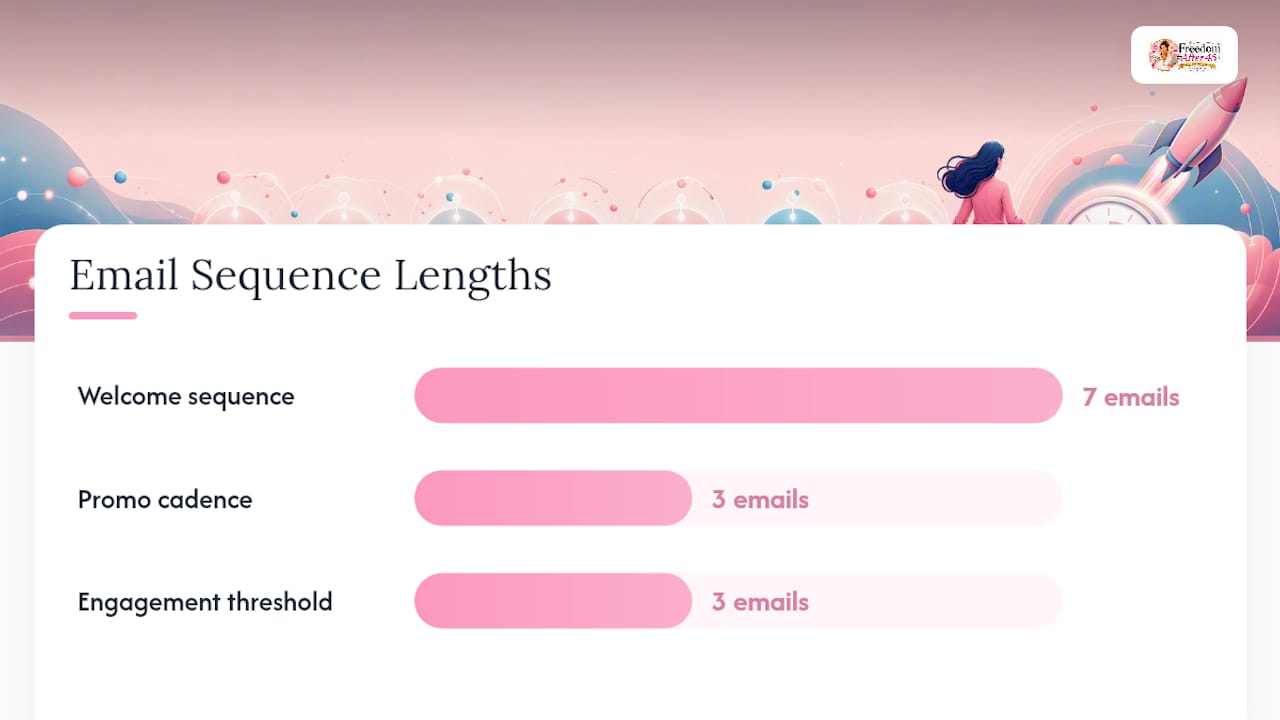
- Sunset unengaged subscribers who haven’t opened or clicked in 60 to 90 days rather than continuing to email them indefinitely.
- Include a genuine one-click unsubscribe in every send, not a buried link that requires three more clicks to actually work.
ISPs watch your spam complaint rate closely, and pushing it above roughly 0.1% starts triggering throttling or blocklisting at major providers. That threshold is one of the clearest, most overlooked warning signs affiliates ignore until their open rates suddenly collapse.
On compliance: the CAN-SPAM Act requires a valid physical address, a working unsubscribe mechanism, and honest subject lines in every commercial email sent to U.S. recipients. If your list includes subscribers in the European Union, GDPR consent rules apply on top of that. Neither of these paragraphs is legal advice. Talk to a qualified attorney if your list spans multiple jurisdictions.
Affiliate disclosure doesn’t have to kill conversions. A short, honest line (“This email contains an affiliate link, which means I may earn a commission if you buy”) placed near the recommendation, written in your normal voice, tends to build trust rather than erode it.
Which KPIs and Tools Should You Track?
Track five numbers, and track them every time you send: revenue per recipient (RPR), click-through rate, conversion rate, unsubscribe rate, and spam complaint rate. RPR is the metric most affiliates ignore and the one that actually tells you whether a list is monetizing well, since it normalizes earnings across lists of different sizes.
Attribution gets built from three layers working together:
- UTM parameters on every link, so your ESP and Google Analytics agree on where traffic came from.
- Affiliate subIDs unique to each campaign or segment, letting you see which email, not just which program, drove the sale.
- Server-to-server postbacks, where the merchant supports them, for tracking that survives cookie blocking and cross-device browsing.
Most beginners can run this entire stack with their ESP’s native reporting plus the affiliate network’s dashboard. Once you’re sending consistent volume and running multiple offers at once, a dedicated attribution tool becomes worth the added cost, mainly because manual UTM spreadsheets stop scaling around the same point your campaign count does.
Set a simple reporting cadence: check performance 48 hours after every send, then again at the 7-day mark once the cookie window has had time to close. Kill or revise anything underperforming after two sends. Scale anything beating your RPR benchmark with a bigger segment on the next round.
What Email Sequences and Copy Actually Convert?
A seven-email welcome sequence does the heaviest lifting in affiliate email marketing, and it should run entirely before your first promotional pitch.
- Email 1: Deliver the lead magnet immediately, no pitch.
- Email 2: Share your story or the problem you solve, still no pitch.
- Email 3: Teach one genuinely useful tactic related to your niche.
- Email 4: Answer the most common question your audience asks.
- Email 5: Share a quick win or case example relevant to the niche.
- Email 6: Introduce your first affiliate recommendation as a natural solution to a problem you’ve already discussed.
- Email 7: Reinforce that recommendation with a specific use case or added detail.
For launches or limited-time offers, a tighter three-email promotional cadence works well: announce and explain the value, handle objections and answer questions, then send a final urgency email as the deadline closes.
Subject lines that protect long-term engagement stay short, specific, and honest, avoiding the all-caps urgency that trains spam filters (and subscribers) to tune you out. Behavioral segmentation, sending different content to people based on what they’ve clicked or bought rather than blasting the whole list, cuts fatigue and lifts conversion at the same time.
Pro Tip: Segment your promotional emails by engagement level. Send your most aggressive offer only to subscribers who opened your last three emails, and keep the pitch lighter for everyone else.
How Does the 2-Hour Workflow Fit This Blueprint?
Freedom After 45 offers a 2-Hour Workflow designed with sequencing that emphasizes building your list foundation and automation before spending time on promotion. It includes video lessons and templates related to list-building and welcome sequences, along with a community for support.
What’s included:
- Video walkthroughs for setting up the core workflow
- Pre-built templates related to sequence writing
- Access to a community for support and collaboration
To be direct about what this is not: Results depend entirely on the effort and consistency put into the system.
The One Habit That Matters More Than Send Frequency
The real trade-off in affiliate email marketing isn’t strategy versus tactics. It’s immediate revenue versus long-term list health, and most beginners choose wrong. They pitch too early, too often, and watch their unsubscribe rate climb while wondering why the list “stopped converting.”
Permission and segmentation beat frequency almost every time. A list of 2,000 people who trust your recommendations will outearn a list of 20,000 who’ve learned to ignore you. I’ve seen the pattern repeat across niches: the affiliate who sends less, but only to the right segment at the right moment, ends up with the higher revenue per recipient months later, not the one blasting every offer to everyone.
Build the permission first. The commissions follow.
— Freedom After 45
A Faster Way to Put This Blueprint to Work
Everything in this guide—including the welcome sequence, deliverability setup, and offer screening—works whether you build it yourself or follow a structured system. There are programs designed specifically for women over 45 who want guidance without needing an existing following or product to start from.

Some courses include video lessons, templates, and community support to help reduce trial-and-error when setting up campaign flows, offering a tested sequence as an alternative to starting from scratch. If you’re weighing the do-it-yourself route against a guided one, compare the 2-Hour Workflow directly against the seven-step plan above and see which timeline fits your schedule better.